

The Little Frog Behind a Big Conservation Story

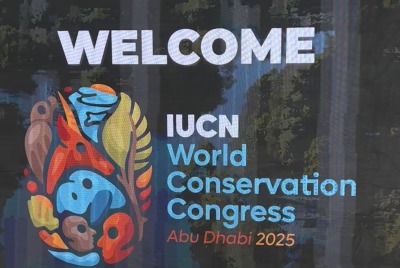 Last October, near the deserts of Abu Dhabi, in an extremely air-conditioned conference center during the IUCN World Conservation Congress, I met Dr. Caleb Ofori-Boateng. I had only been working for Rainforest Trust for about 2 months, and during every meet-and-greet when it was time for a “fun fact,” I usually shared that I was a Certified Frog Watch volunteer and could identify the calls of 26 frog species in coastal North Carolina. The follow up was always, “you need to read about Caleb and our project with Herp Conservation Ghana.”
As I read about Caleb and the non-profit he founded, Herp Conservation Ghana, I was in awe. Caleb is Ghana’s first trained herpetologist, and a Whitley Award Winner. He’s discovered new frog species and established protected habitats. He champions the conservation of amphibians and reptiles, animals often overlooked despite their ecological importance and alarming rates of decline. He is a rockstar in the conservation world.
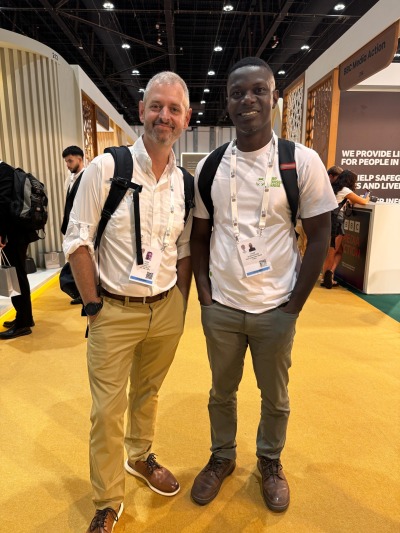
When I found out Caleb was going to be in Abu Dhabi last year, I was so excited that I would get the opportunity to meet him in person. When the time came, I summoned the most eloquent salutation I could come up with at the time: “Hi. It is so nice to meet you. I really love frogs.” (I am glad that I didn’t demonstrate any frog calls, “Hello, or as the American Bullfrog might say…Wooomp Wooomp.”) Fortunately, that odd greeting didn’t faze Caleb (he really loves frogs too) and we went on to talk about the species at the heart of Rainforest Trust’s partnership with Herp Conservation Ghana: the Critically Endangered Togo Slippery Frog.

A Critically Endangered Togo Slippery Frog in Onepone Endangered Species Refuge. Photo Credits: Brynn Garner

Critically Endangered Togo Slippery Frogs in Onepone Endangered Species Refuge

Critically Endangered Togo Slippery Frogs in Onepone Endangered Species Refuge
The Togo Slippery Frog is endemic to the Togo-Volta highlands in eastern Ghana and western Togo known for its distinctive high-pitched whistle that sounds like a bird. For over 40 years, the frog was thought to be extinct due to hunting, habitat destruction, and agricultural pollution. In 2005, Caleb was on an expedition that rediscovered the Togo Slippery Frog and in 2006, he founded Herp Conservation Ghana to secure its protection. Rainforest Trust began working with Herp Conservation Ghana in 2018 to establish the first forest area protected specifically for frogs in West Africa, the 2,132-acre Onepone Endangered Species Refuge, to protect the frog from hunting and safeguard its habitat from land-grabbing for high-end, mountain-based tourism.
Herp Conservation Ghana’s more recent discovery of a larger, breeding population of Togo Slippery Frogs outside the refuge presented an urgent need to quadruple the protected area to safeguard the majority of the frog’s global range. Without swift conservation measures to limit deforestation and agricultural pollution and to discourage hunting of the frogs, worries mounted that the newly identified population could be wiped out, spelling the end of hope for the frog’s survival. With the support of Rainforest Trust, the expansion of the refuge was made official in 2025 to protect the estimated 250 mature Togo Slippery Frogs surviving in Ghana and Togo. Now, the hope is, if the highlands and headwater streams can be protected and a substantial number of juveniles recently identified reaches full maturity, the known global adult population of the Togo Slippery Frog would more than double.
Caleb and Herp-Conservation Ghana have been working to protect the amphibians and reptiles in Ghana for 20 years and their long-term success is attributed to the strong local support for their community-based conservation methods.
“Who would have thought that protecting a frog that lives like a fish and whistles like a bird would make such an impact on a community?” he asked, as we talked at the World Conservation Congress. Conservation of the frog’s habitat created opportunities for ecotourism. What started as “just protecting a frog” ended up protecting the forest, protecting the water, and employing the community, Caleb told me. “People said that it was a waste of time. But protecting the Togo Slippery Frog has been way bigger than we ever thought possible.”
I wasn’t sure if the chill bumps on my arms were from the air conditioning working overtime to combat the desert heat, or because of the passion that I heard from Caleb. I left Abu Dhabi and headed back to North Carolina looking forward to the clacks of a Southern Leopard Frog to welcome me home. But I couldn’t stop thinking about the frog that lives like a fish and whistles like a bird thousands of miles away, and hoping that one day I might get to see one in person.
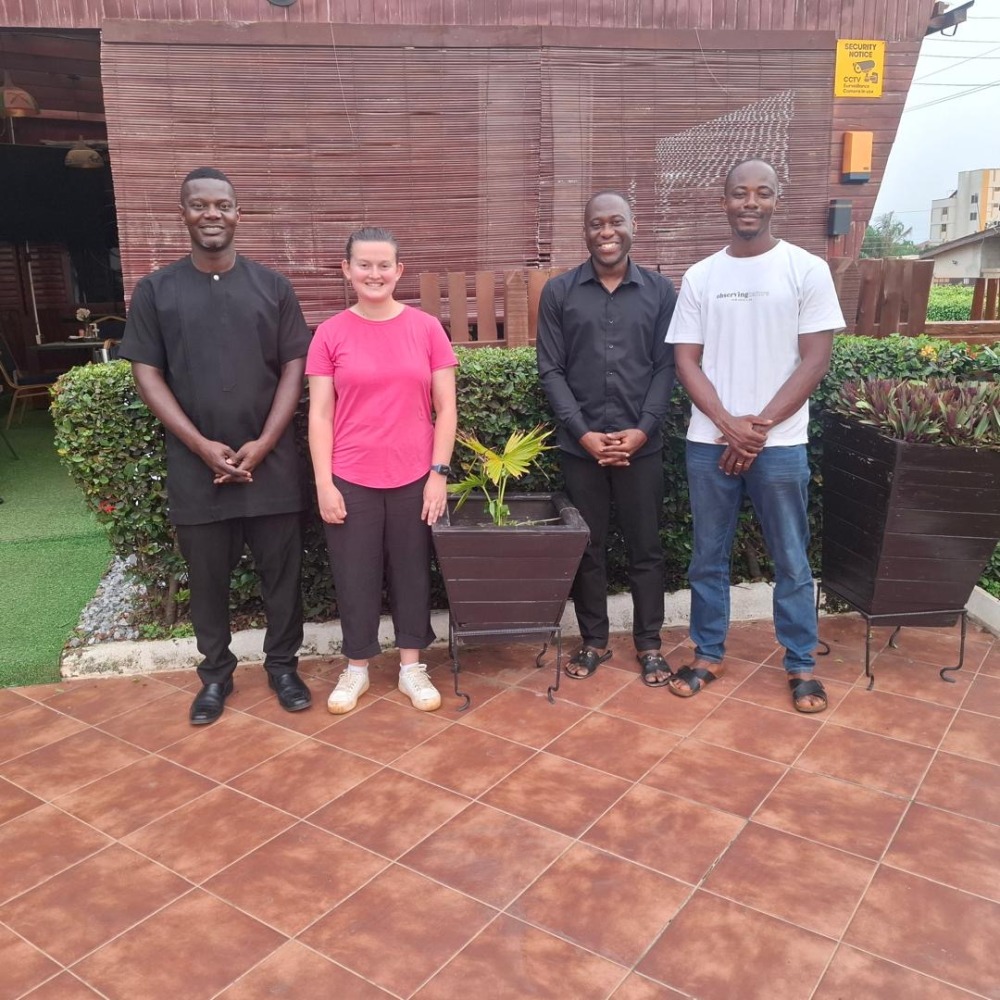
Six months later, in April 2026, I had the opportunity to travel to Ghana to visit another Rainforest Trust partner and conservation rockstar, Emmanuel Amoah and The Threatened Species Conservation Alliance (THRESCOAL) to celebrate the launch of the Tano River Crocodile Sanctuary. Getting to search for Critically Endangered West African Slender-Snouted Crocodiles with Emmanual and the THRESCOAL team was the experience of a lifetime, but I couldn’t imagine traveling 5,000 miles to Ghana and not trying to see a Togo Slippery Frog.

A baboon on the side of the road in Ghana hoping a human will throw it a morsel of food.
Caleb was not able to join me at the Onepone Endangered Species Refuge, but I was in good hands with Augustine Oti Yeboah, Onepone’s site manager. As Augustine and I set out from Accra towards the mountains of Amedzofe, we talked about our families (he had a 10-month old baby at home, who I did get to meet, along with his wife Sylvia), the baboons walking along the highway, (“those are the lazy baboons,” Augustine said, “just waiting for a human to throw them a scrap of food”), and frogs. We talked a lot about frogs.
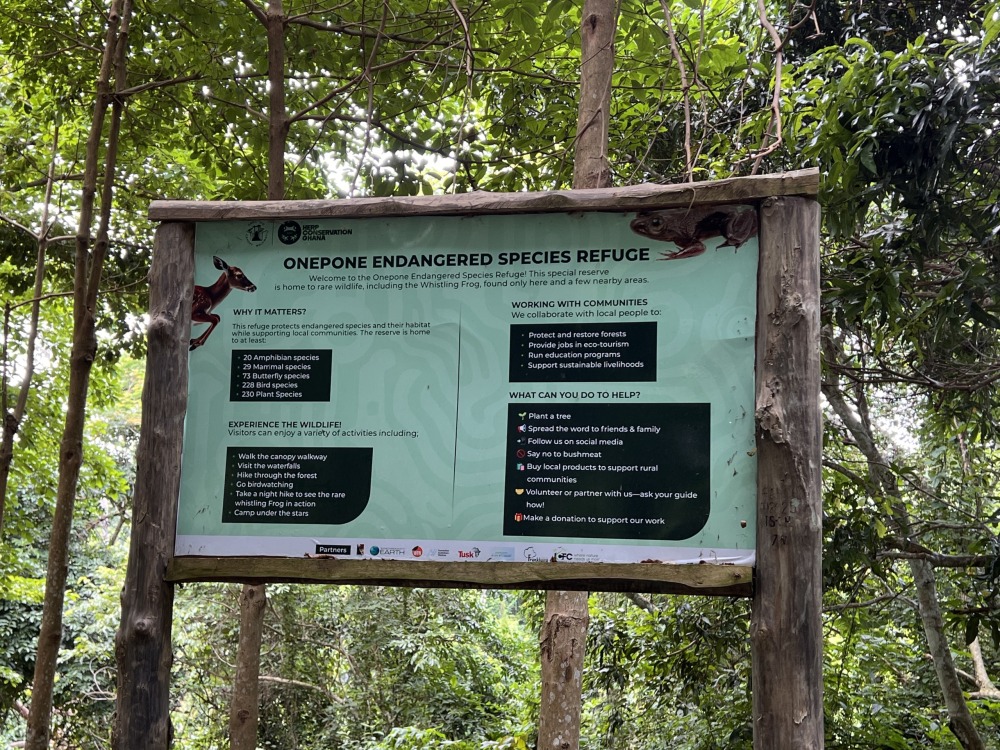
We made it to Amedzofe and had to wait for nightfall. As I donned my hiking pants and boots and checked the batteries in my camera, I was almost giddy. Giddiness quickly turned to anxiousness as I tried to maneuver in the fast-flowing streams that Togo Slippery Frogs call home without falling on my behind, or worse, falling face first and breaking my camera. Fortunately, Augustine and another Herp Conservation Ghana staff member, Gideon, helped me keep my footing while keeping an eye out for the frogs I had traveled so far to see.
Togo Slippery Frogs are quick. Augustine or Gideon would point one out, and in an instant it was gone. I am grateful for the few who stayed still long enough for me to snap a photo. Augustine and Gideon wanted me to see the frog up close, but that meant we had to catch one. It didn’t take long for Gideon to return with a frog in hand.
He handed it to me. My giddiness returned as I held this absolutely remarkable creature: the webbed back feet allowing it to swim like a fish, the muscles that propel it through the water, the face that, forgive me, the only way I can describe it is “cute as a button.”
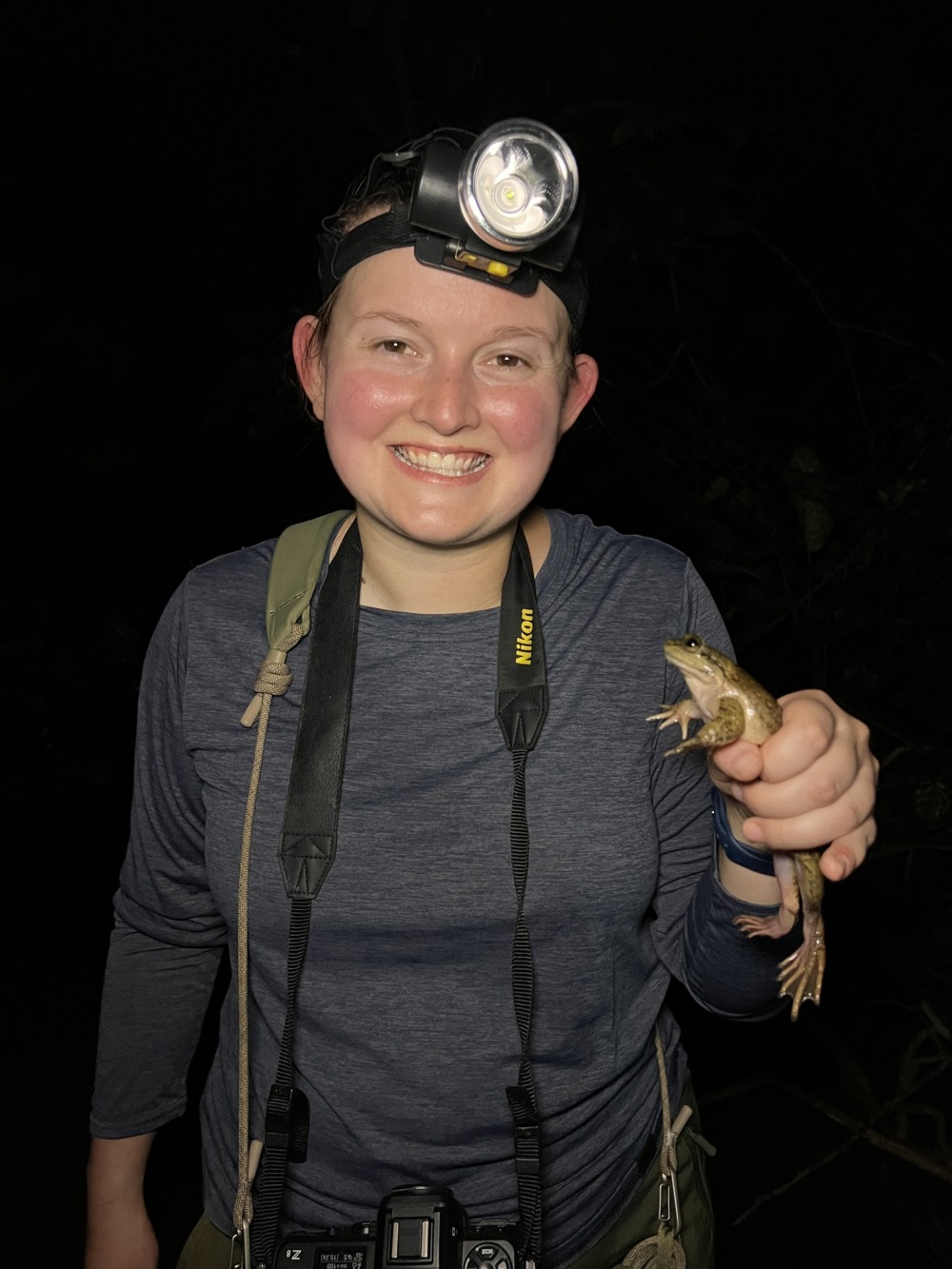
I told the frog that I loved it and, very dramatically, that I would die for it (given how clumsy I am and how many times I had already nearly fallen in the stream, it did not seem dramatic at the time). I gently returned it to the stream. As soon as it hit the water, the Togo Slippery Frog swam away within a blink of an eye.
As we were driving away, I realized that I had seen the frog swim like a fish, but I hadn’t heard it whistle like a bird. The next night, we went back to the refuge for the express purpose of hearing the Togo Slippery Frog’s distinct, high-pitched whistle. When we arrived, rain started to pour down, a real “frog strangler” as we would say in the South. Underneath the shelter, all I could hear was rain beating against the tin roof.
I worried that I would have to leave Ghana without adding a 27th frog call to the list of those I could identify. Eventually, the storm passed, and we began to listen as the forest came alive with a buzzing chorus of cicadas. Every time I heard something remotely similar to a whistle, I would mouth to Augustine and Gideon, “Is that it?” They would just shake their heads no.
Suddenly, and undoubtedly, I heard the whistle. I looked over at Gideon and Augustine, eyes wide open, and they nodded yes! I threw my hands up triumphantly and listened as other Togo Slippery Frogs began to announce their presence.
Frog Call #27. Check!
I had seen the Togo Slippery Frog swim like a fish and heard it whistle like a bird. I couldn’t have asked for anything more. Who would have thought that conservation of this single species would make such an impact on a girl from North Carolina?
On my way home, reflecting on my journey, Caleb’s wisdom struck me again, from a new perspective this time: “Protecting the Togo Slippery Frog has been way bigger than we ever thought possible.”

Amedzofe Canopy Walkway Sign

Amedzofe Canopy Walkway

Brynn Garner on the Amedzofe Canopy Walkway

Brynn Garner with the Behavior Change Team in Amedzofe, Ghana
The Latest
The Little Frog Behind a Big Conservation Story

Rainforest Trust Surpasses 70 Million Acres Protected Worldwide; Organization adds 10 million protected acres in just eight months

From Landmines to Rainforest Guardians

Rainforest Trust Announces $10 Million Commitment to Conservation in Madagascar

Angola: A Letter from Our CEO

Madagascar Designates Protected Landscape in Tsinjoarivo’s Montane Rainforest

Why We Support Indigenous-led Conservation

Study Reveals Thousands of Previously Undocumented Species in Ecuador’s Chocó
Sign up to receive the latest updates
"*" indicates required fields