

Children of the River Gods: A journey to Ghana’s Tano River, where culture, conservation, and crocodiles converge.
On a small hill above the Tano River in April, I was holding my camera and my breath, trying to keep my hands from shaking, as Emmanuel Amoah played the sound of a crocodile hatchling through a Bluetooth speaker hidden under foliage along the riverbank.
The water was still.
So still, I was looking in the wrong direction when a West African Slender-snouted Crocodile (Mecistops cataphractus) surged out of the river, coming to the aid of her babies. Finding no hatchlings in distress, she turned around and slinked back into the water as quickly as she emerged, completely disappearing from sight. I stood breathless and in awe, until a high heart-rate alert from my watch brought me back to reality.
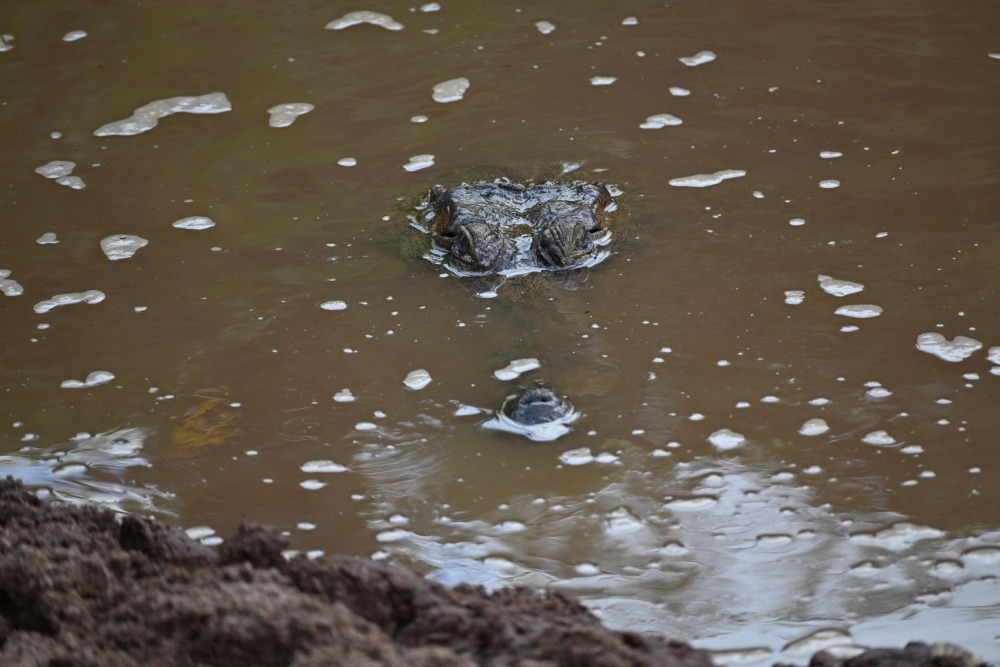
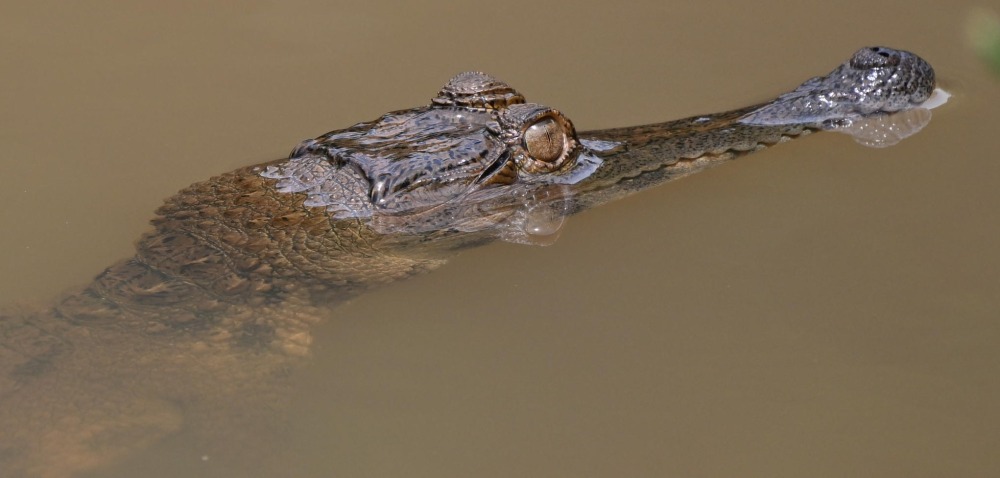
As I descended the hill and started walking away, I took one more look at the river and saw two eyes hovering above the water. Watching.
I quickened my pace.
It was an eerie reminder that in the Tano River, the most important things are lurking below the surface.

Emmanuel Amoah speaks with community members. Photo: Brynn Garner
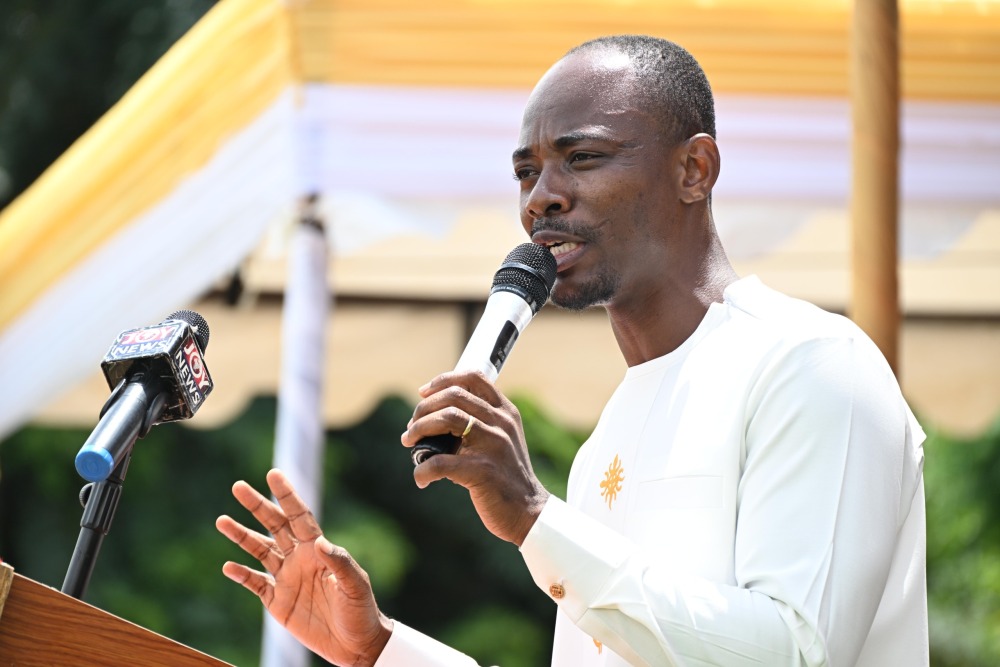
The Crocodile Whisperer
When I started working at Rainforest Trust last August, someone told me that Emmanuel Amoah was the Steve Irwin of Ghana. Emmanuel founded the Ghanaian NGO Threatened Species Conservation Alliance (THRESCOAL) in 2016, and our two organizations first partnered together in 2020 as part of a race to Save the Critically Endangered Slender-snouted Crocodile from Extinction. Over the past 75 years, 70-90% of their population has been decimated by habitat loss, degradation, hunting, and pollution, with less than 500 individuals remaining in the wild.
But in southwestern Ghana, strong local traditional beliefs have helped this species cling to survival. An estimated 473 crocodiles make their home in the 25-mile Techiman-Tanoso stretch of the Tano River. However, rapid destruction and degradation of nesting areas and water pollution continues to threaten their survival. Without protecting their habitat, the community fears that one of the most revered and rarest crocodiles in the world could disappear forever.
As Emmanuel and I walked along the banks of the Tano River, he told me that he began studying crocodiles in 2014 as a student at Kwame Nkrumah University of Science and Technology in Kumasi, Ghana. In academia, he knew he could write good research papers, but they would just sit in a drawer collecting dust. His true passion was finding a way to help the species and the community. He founded THRESCOAL to bridge that gap. As part of THRESCOAL’s mission, Emmanuel takes demand-driven research and uses it to empower local communities, raise awareness, build the capacity of young conservationists, and push for the development of environmentally oriented policies for the conservation of all wild species.
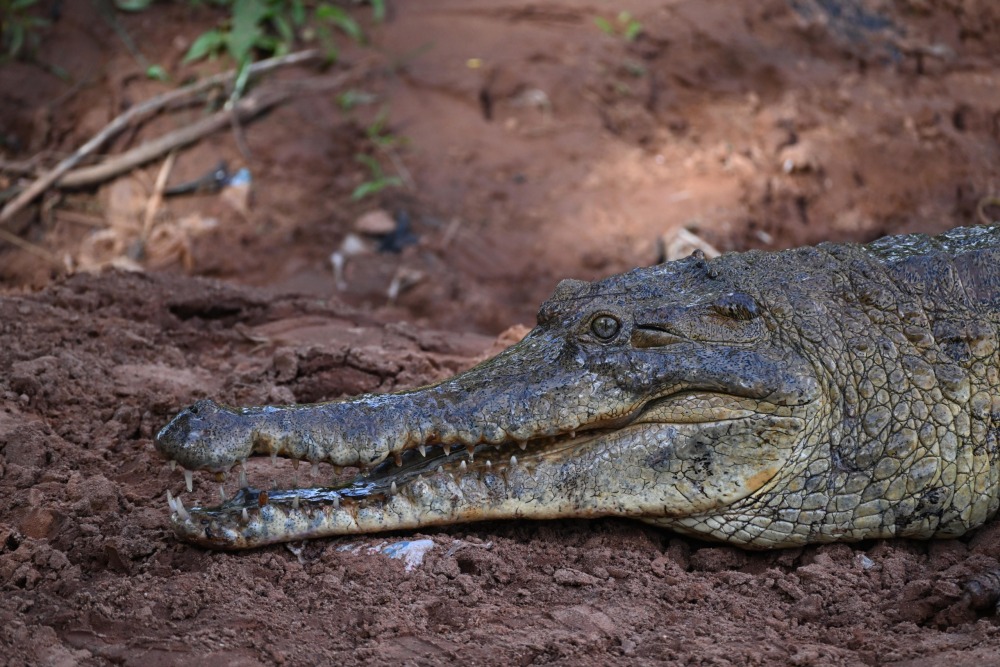
Nearly as soon as the NGO was founded, Emmanuel discovered the population of West African Slender-snouted Crocodiles in the Tano River. He began working with the community to safeguard the river and formally protect the population of crocodiles living there. With Rainforest Trust’s support, the 971-acre Tano River Crocodile Sanctuary was established, and on September 24, 2025, it was designated through the community bylaw process.
I traveled to Ghana in April to attend the official launch ceremony for the new Tano River Crocodile Sanctuary. My goal was to see West African Slender-snouted Crocodiles in the wild, better understand our work to protect this species, and show support for the communities that have been critical to its survival. What I thought would be a thrilling trip to Ghana to photograph critically endangered crocodiles became something much deeper. It became a journey into culture, conservation, and the spiritual life of a river.
The River and Its Children
Nearly half of Ghana’s population is Akan, an ethnolinguistic group primarily found in southern and central Ghana and southeastern Côte d’Ivoire. The Akan language includes many dialects; as I traveled through the region, I most often heard Twi.
The Akan are known for rich cultural traditions, including matrilineal lineage, vibrant Kente cloth, intricate gold and metalwork, and Adinkra symbols. The Akan include more than 17 subgroups, among them the Akuapem, Akyem, Ashanti, Baoulé, Bono, and Fante. In Techiman and Tanoso, it is the Bono people who hold a deep spiritual connection to the Tano River.
Tano is the river god, and for the small-scale farmers who live along its banks, the Tano River is not only sacred, but also a source of life in the most practical sense. Its water sustains their crops and shapes the rhythm of daily life. Everything that lives within is considered a “child of the river god,” and people are forbidden to harm Tano’s children. This belief has helped protect fish populations and allowed the crocodiles, highly specialized fish-eaters, to have abundant food.
I thought about this reverence after returning home to southeastern North Carolina, where alligators make their homes in ponds, marshes, and roadside ditches. One day, driving through my hometown, I saw an alligator that had been hit by a car and left on the side of the road. My mind went immediately back to Ghana, to the care shown for the Slender-snouted Crocodiles of the Tano. If a crocodile dies there, the community wraps the body in white cloth, performs funeral rites, and buries it.

A water pump used for irrigating agriculture fields near the Tano River. Photo: Brynn Garner
How the Crocodiles Were Nearly Lost
Walking through the fields with Emmanuel, the phantom smells of chili from past harvests lingered in my nose. As I peppered him with more questions about his life, the sanctuary, and all things crocodile, his knowledge seemed endless.
I asked how he knew there were so many Slender-snouted Crocodiles in Techiman and Tanoso. He said researchers searched 46 different sites covering over 435 miles of crocodile habitat in Ghana and Côte d’Ivoire and saw only four crocodiles the entire time. While conducting research in the Jimi River in the Obuasi Municipality, Emmanuel met a man who told him there were many crocodiles in the Tano River, and they should visit. Emmanuel and his team were skeptical, but two days later, the man got a local contact to start sending photos from the banks of the Tano River. When the conservation team visited, they saw 13 crocodiles within a single mile. That discovery revealed the extraordinary importance of this stretch of river.
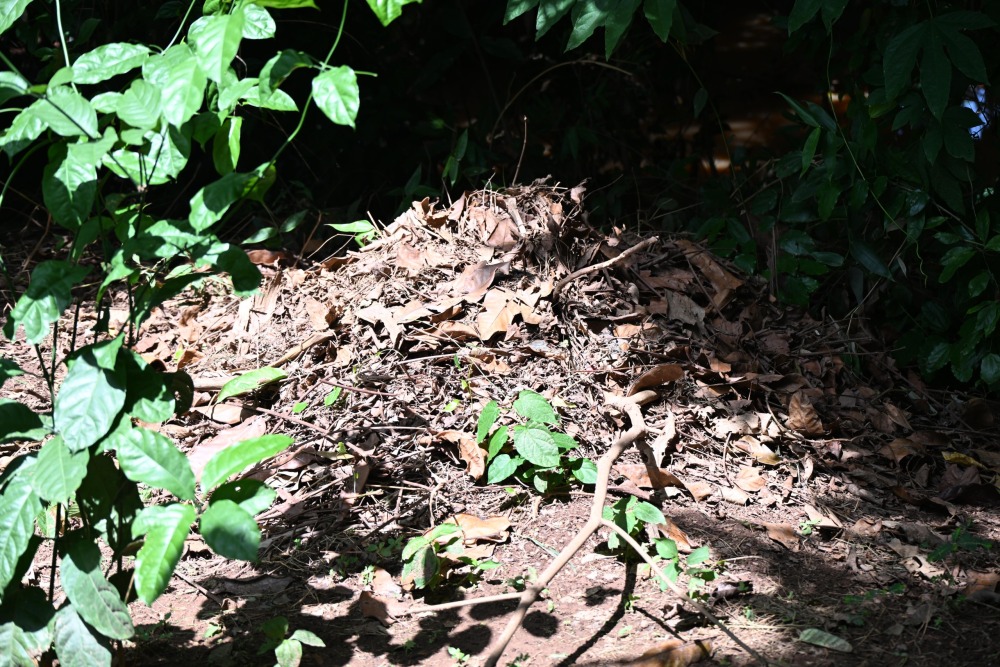
Emmanuel said people in the Techiman-Tanoso enclave are mostly small-scale farmers. They farm close to the river because they lack irrigation systems and need easy access to water. He told me that for many years, people thought that because they did not hunt crocodiles or fish in the river, they were protecting them. But crocodiles lay eggs in riparian habitat, not in the water itself, using forest leaves to build nests that they cover and incubate until the eggs hatch. When people farm right up to the river’s edge, it clears the vegetation crocodiles need for nesting. They were unintentionally shrinking the crocodile’s population. This is when Emmanuel started thinking about how to educate the community and bring them into designing a successful conservation program.
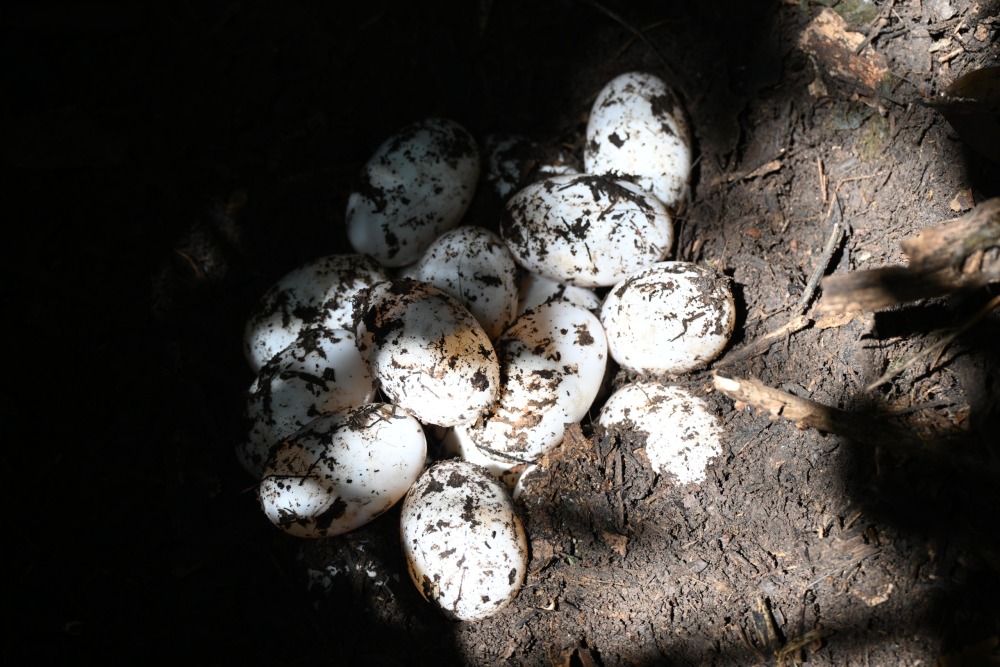
In addition to threats from habitat loss, this species is already reproductively vulnerable. When the crocodiles nest, they typically lay a clutch of about 20 eggs, less than other similar species. With fewer eggs to combat the odds, hatchling survival matters enormously. As hatchlings die, the population loses its reproductive cushion. Every nest and every healthy stretch of river matters, especially with added threats from climate change, which is changing the sex ratio of many reptilian eggs: hotter nesting conditions skew populations toward more female hatchings, and many species’ long-term population stability is at risk if these conditions persist.

Mango saplings demarcate the boundary for the sanctuary. Photo: Brynn Garner
The 20-Meter Promise
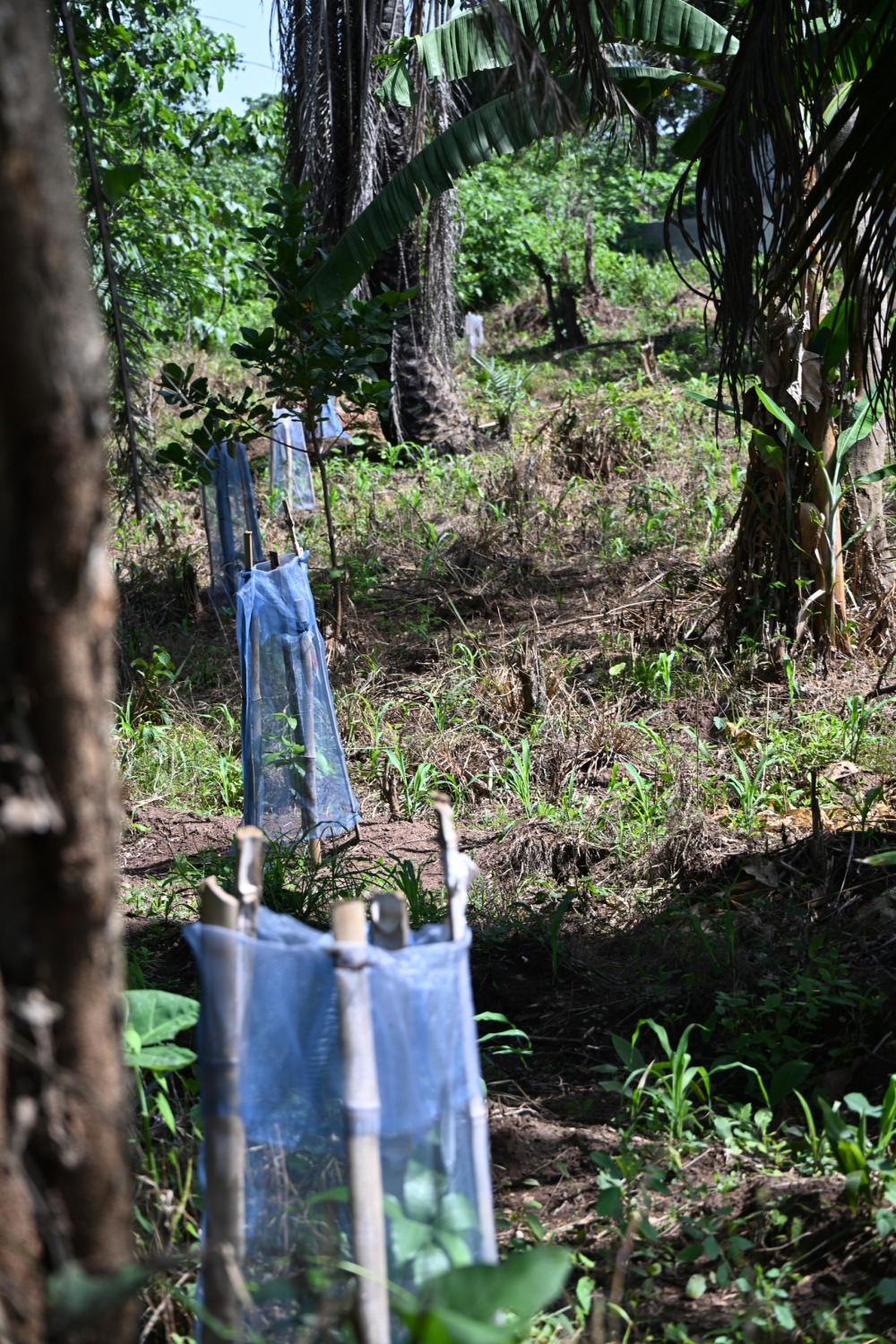
The Tano River Crocodile Sanctuary keeps community conservation close to heart. As Emmanuel and I met with community members, his passion for supporting the people as well as the crocodiles became increasingly clear. He said conservationists cannot simply ask people to give up something without offering support in return.
Losing any amount of land is a sacrifice for small-scale farmers who rely on river access. But to create the new crocodile sanctuary, nearly 300 landowners made a commitment not to farm within 20 meters (65 feet) of the riverbank. This boundary is marked by mango saplings, acting as a living demarcation line. As the trees grow, they will provide fruit for the community and create a riparian buffer that protects nesting areas, reduces disturbance, and restores natural vegetation.

The alternative livelihood initiatives include snail farming and livestock rearing. Photo: Brynn Garner
Alternative Livelihoods: Snails, Sheep, and Bleats of Appreciation
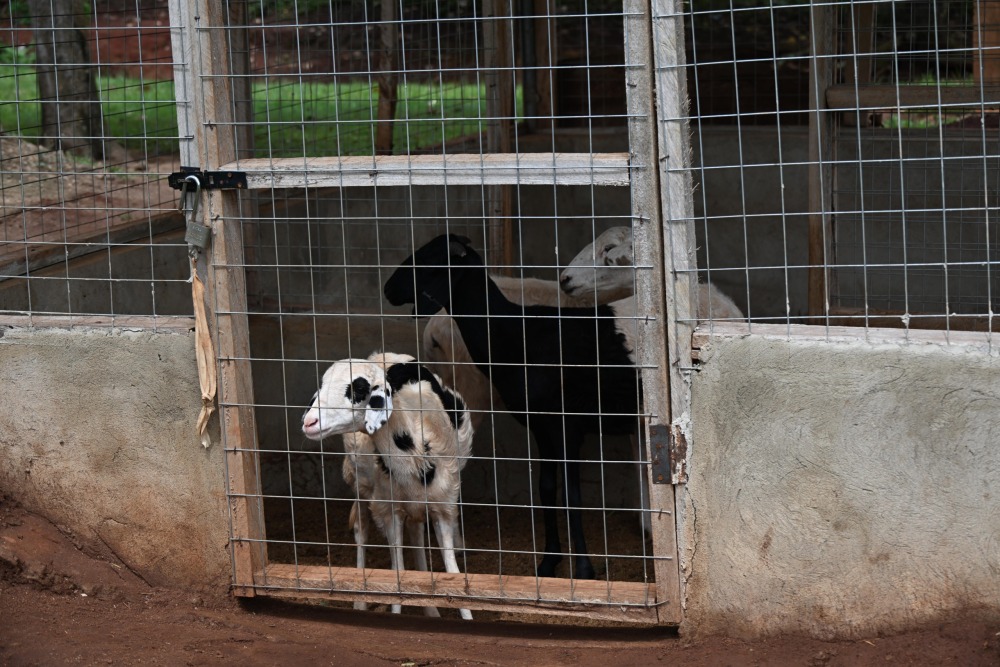
Because farmers are giving up access to productive land near the river, THRESCOAL and Rainforest Trust are also supporting alternative livelihoods like snail farming and sheep rearing to help offset the impact of the 20-meter buffer. This support shows respect and appreciation for landowners’ participation. The goal is not to separate people from conservation, but to make them part of it.
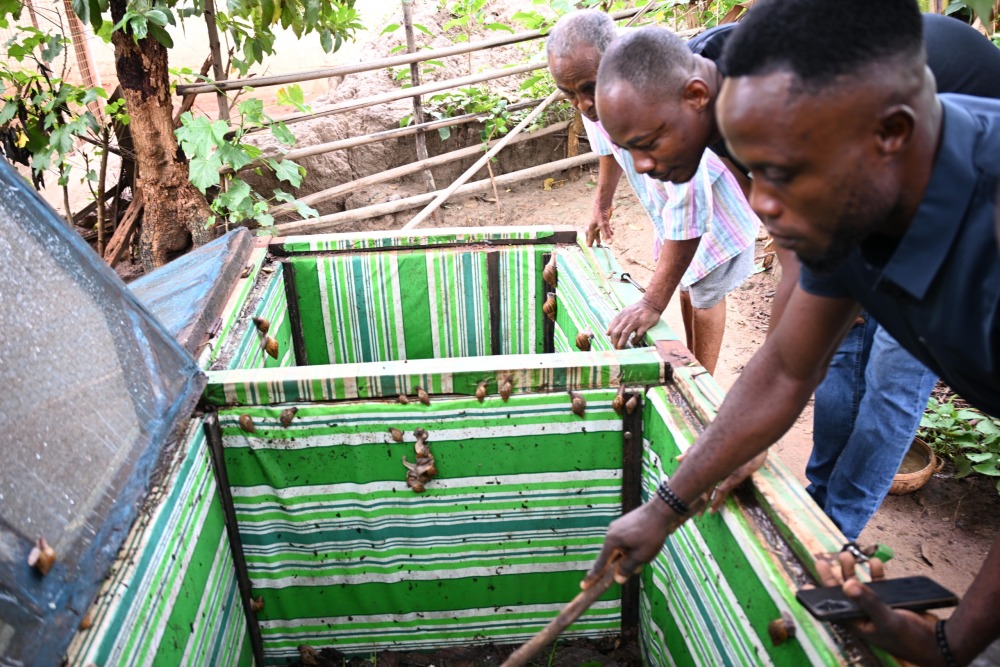
I spent a day peering into snail pens and listening to the bleating of sheep as Emmanuel met with community members to make sure everything was going well. If they brought up challenges, Emmanuel was quick to offer solutions or promises to come back soon. I expected small snails but was shocked when a landowner held up a snail the size of my hand. Snails are a popular source of protein in Ghana and are sold in markets throughout the country. While I attempted to try as many local dishes as possible, I’m sorry to say the giant snail was not among them, even though I guessed they would be prepared with ample spices.
The Heat, the Food, and the Humbling Reality of Fieldwork
I had come prepared to learn about crocodiles. I was less prepared for the bug that flew directly down my throat, constantly falling on my butt as I traversed the slippery river bank, the river crossing that nearly claimed my dignity, sweating more than I thought was biologically possible, and eating food so spicy it brought tears to my eyes But everywhere I went, my embarrassment was met with laughter, generosity, and immense kindness.
The more time I spent in Ghana, the more I understood that the crocodile existed in two worlds at once: as a living, breathing animal beneath the surface of the river, and as a symbol woven into Ghana’s culture.
I noticed this symbol painted on the walls, woven into fabric, and even molded in chocolate. I learned that these were Adinkra symbols, which represent concepts, proverbs, or philosophical teachings. I was drawn to one symbol in particular that looked like a turtle. When I asked my guide about it, he told me that it was actually a crocodile, Denkyum. How fitting!
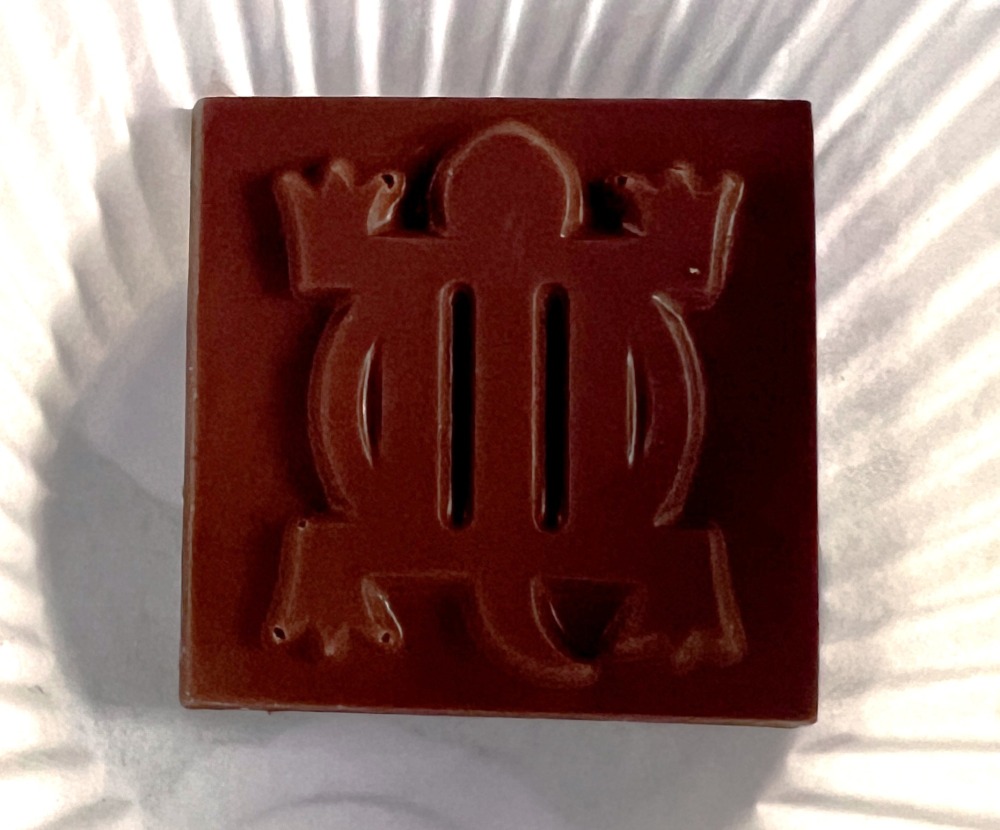
The Denkyem symbol represents adaptability and symbolizes the ability to thrive in diverse circumstances for “the crocodile lives in water yet breathes air.” I later discovered Funtunfunefu-Denkyemfunefu, the Adinkran“Siamese crocodiles” representing cooperation and highlighting the necessity of teamwork for “the Siamese crocodiles share one stomach, yet they fight over food.”
The symbols quickly became a metaphor for the projects I explored with Emmanuel. The Siamese crocodiles represented the necessity of the community working together for the crocodiles. The Denkyum symbol reflected the misconceptions the community held about crocodiles.

On April 17, 2026, the community celebrated the launch of the Tano River Crocodile Sanctuary. The celebration included speeches, poetry, music and dancing. Photo: Brynn Garner
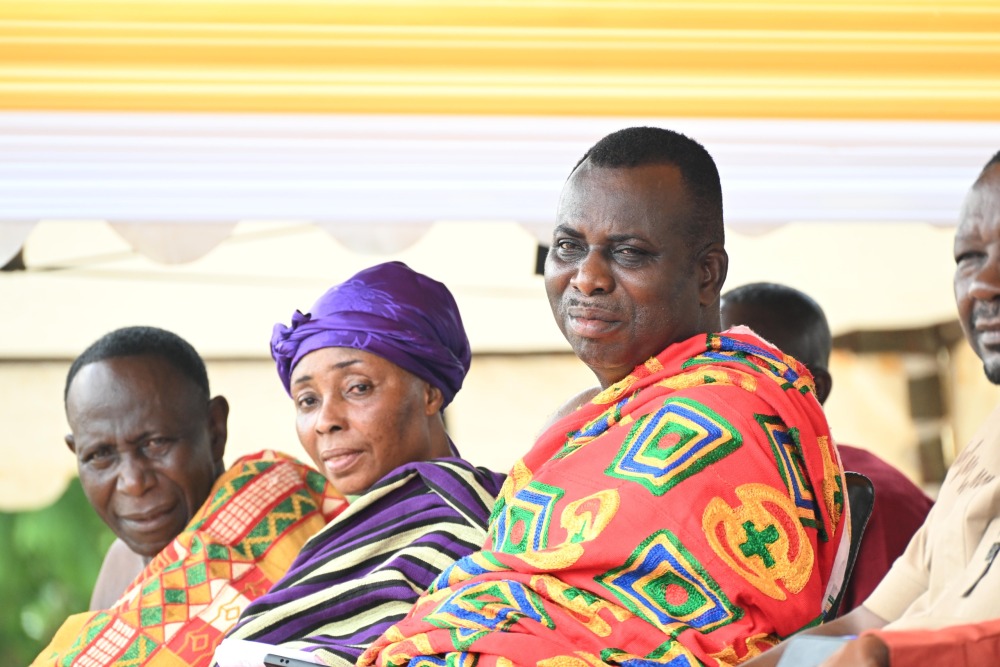
On April 17, I attended the official launch of the Tano River Crocodile Sanctuary. This was not a quiet bureaucratic conservation announcement. It was joyful, colorful, and communal. It was a community-wide celebration with poetry, dancing, music, and even a very dedicated THRESCOAL employee dressed head-to-toe in a Slender-snouted Crocodile costume, despite the Ghanaian heat (the temperature stayed in the 90s for the duration of my trip). Chiefs, landowners, project partners, and neighbors all came together, and Emmanuel wore the Siamese crocodile symbol on his jacket as a reminder that no one protects a river alone.

On April 17, 2026, the community celebrated the launch of the Tano River Crocodile Sanctuary. The celebration included speeches, poetry, music and dancing. Photo: Brynn Garner
I feel proud to be part of Rainforest Trust, where we help advance THRESCOAL’s work to establish and strengthen the Tano River Crocodile Sanctuary. Rainforest Trust’s role in this work is to support the people closest to the place and the species we protect. Partners like THRESCOAL, and leaders like Emmanuel, understand both the urgency of conservation and the patience required to make it last.
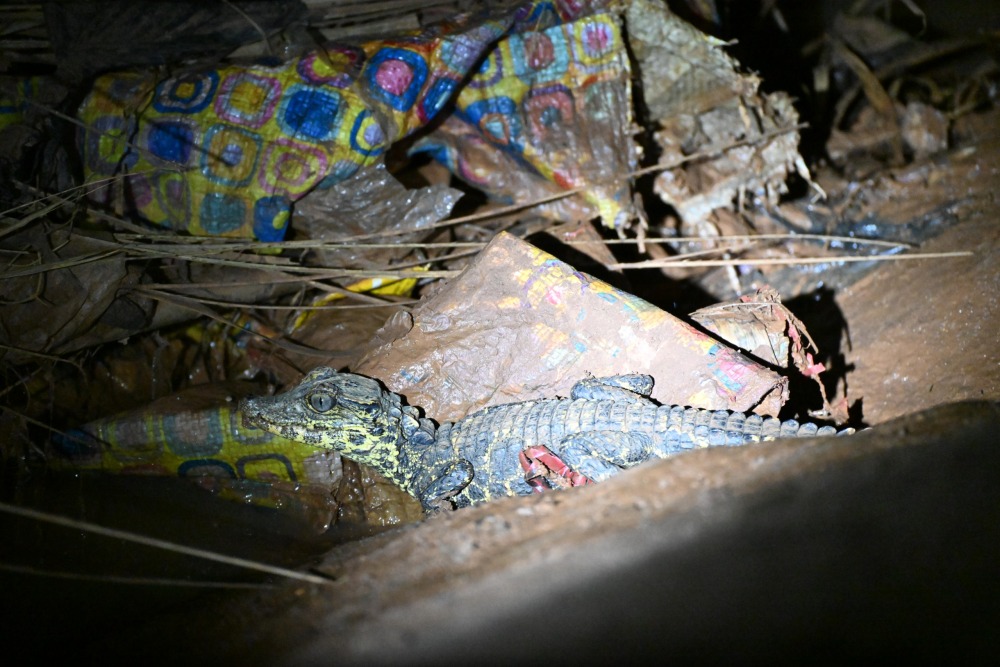
However, the threats to Slender-snouted Crocodiles are not removed by the designation of the sanctuary alone. Plastic pollution washing downstream and onto the riverbanks is now one of the biggest dangers. One haunting moment has stayed with me. During a night hike with Emmanuel, we came across a nest. A mother crocodile had tried to do what her species has done for millions of years: gather material, cover her eggs, give them a chance. But where there should have been leaf litter, there was plastic.
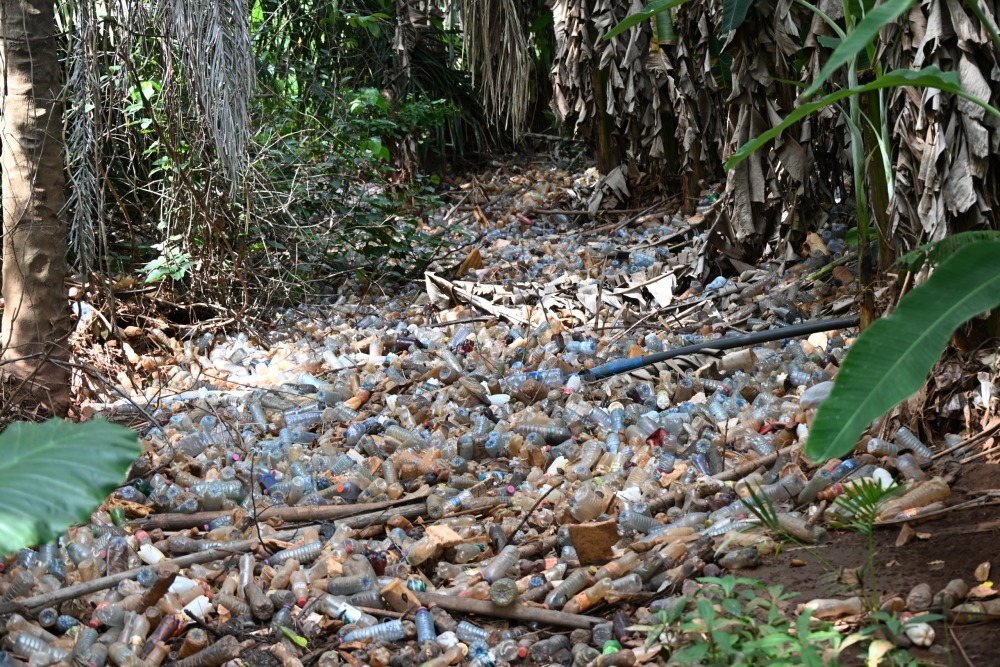
Emmanuel and his team are still looking for more long-term solutions. TRESCOAL’s next steps include cleaning up plastic that has already accumulated, creating practical systems to keep plastic from entering the river, and securing more habitat before gold mining expands upstream and threatens what remains. Mining has already caused significant chemical pollution and damage downstream, making upstream protection urgent
The Last Crocodile
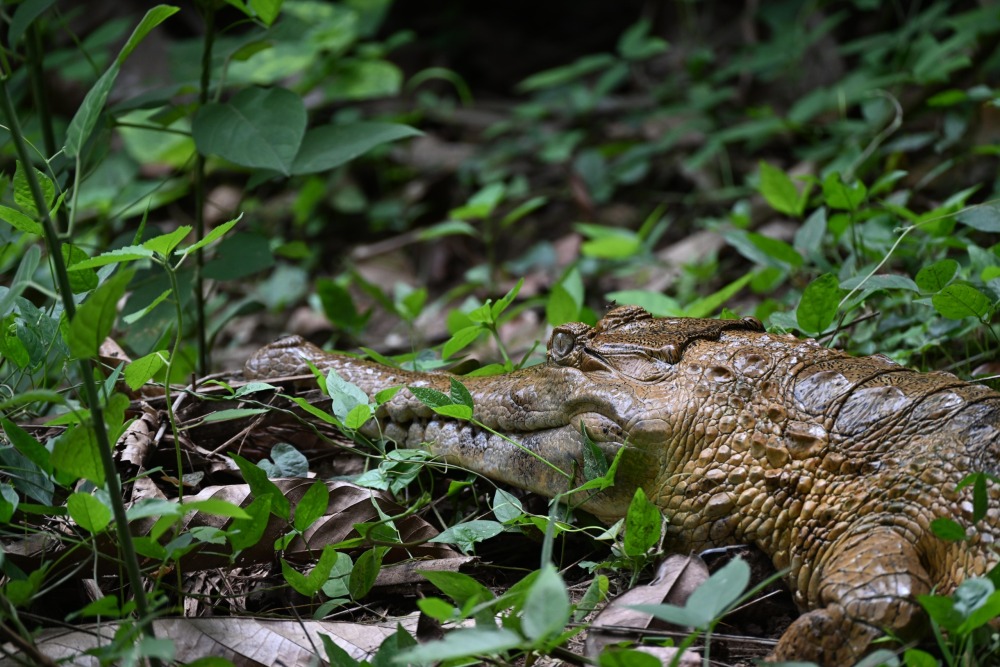
Before it was time for me to head to the airport, Emmanuel took me to the river one last time to see one last crocodile. He played the now familiar call of a hatchling, and a crocodile emerged from the river onto the bank. I took a few photos and then I put my camera down. Emmanuel asked if I had gotten enough photos, if I was ready to leave. I responded that I wanted to take a few moments to look at her. I could not know her sex without capturing and examining her, which would risk losing more fingers than I was willing to part with, but I had a feeling she was female.
I watched her breathing.
I watched her eyes shift.
After taking nearly 2,000 photos, I realized the importance of putting the camera down. I wanted to be present and share a moment with this incredible living being. I had spent so much of the trip trying to capture what I was seeing that I almost forgot to simply see it.
The first crocodile had left me breathless because she appeared so suddenly. The last one held me still because she stayed.
What Lurks Below the Surface
As I write this from my desk, I am over 5,000 miles away from the Tano River but my memories will remain with me for the rest of my life. Halfway around the world, somewhere beneath the surface of the Tano River, crocodiles still wait. They are ancient, elusive, and more vulnerable than they appear. Their future depends on mango saplings planted along a riverbank, on farmers willing to leave space for nests, on communities that still believe the river’s children deserve respect, and on people like Emmanuel who know where to look and how much will be lost if the world looks away.
The Latest

A Heart That Still Beats: The Rediscovery of Mindoro’s Rarest Bird

Nine private funders announce more than $500 million commitment to recover the world’s most threatened species

The Little Frog Behind a Big Conservation Story

Rainforest Trust Surpasses 70 Million Acres Protected Worldwide; Organization adds 10 million protected acres in just eight months

From Landmines to Rainforest Guardians

Rainforest Trust Announces $10 Million Commitment to Conservation in Madagascar

Angola: A Letter from Our CEO

Madagascar Designates Protected Landscape in Tsinjoarivo’s Montane Rainforest
Sign up to receive the latest updates
"*" indicates required fields