

The Future of Fire in the Rainforest

Rainforests and tropical landscapes in South America face an increasingly complex future with fire, as hotter and drier conditions combine with deforestation and land-use change to alter when, where, and how fires burn. Experts predict next year will be the planet’s hottest on record, and the threat of fire will continue to rise. According to the United Nations, an impending, powerful El Niño will also “pour fuel on the fire of a warming world.”
“The risk of large, severe fires has been increasing across much of the tropical region,” said Dr. Ameyali Ramos, Latin America Conservation Director for Rainforest Trust. “But there are also seasons that are a lot more worrying, and I think that the fire season starting in 2027 is going to be one of those.”
The last El Niño, in 2023, exacerbated years-long droughts across much of tropical South America. Under these conditions, when fires struck, they spread farther and burned with greater intensity. By the end of 2024, fires had burned nearly 181 million acres across the continent, a cumulative area larger than Texas.

In Ecuador, after our project with Jocotoco strengthened community fire management, park guards and local volunteers successfully contained flames until firefighters arrived, saving key conservation areas from destruction. Photo by Nolberto Ordoez.
Fragmentation Fans the Flames
Humid tropical rainforests evolved with very little natural fire, Ame explained. This makes places like the Amazon rainforest especially vulnerable when fires do occur. Unlike some savannas, grasslands, and dry forests that depend on periodic burns, most tropical rainforests cannot withstand even relatively low-intensity fires.
In the Amazon, fires are typically ignited by humans at the edges of fragmented forests. Under drought conditions, Ame added, “deforestation, fragmentation, and repeated disturbance create pathways for fire to enter forests that historically remained too humid to burn.”
Once fire enters a degraded forest, it can fundamentally alter the ecosystem. Trees become more vulnerable to mortality. Gaps in the canopy make forests hotter and drier, and repeated fires push landscapes into cycles of deterioration that become increasingly difficult to reverse.
These are the blazes that ravaged the Amazon in 2024. “It’s like a trauma,” Ame said, “and the rainforest’s recovery could take decades.”
“We always have fire on our minds.”
The Amazon was not the region’s only water-dominant landscape to suffer the fatal combination of El Niño, extreme heat, and extended drought. The 2024 fires scorched more than 3 million acres in the world’s largest tropical wetland, the Pantanal, which stretches across Brazil, Bolivia, and Paraguay.
Like the Amazon, the Pantanal plays a critical role in regional water cycles and harbors extraordinary biodiversity. Yet it differs ecologically in important ways. Fire has historically been part of some Pantanal landscapes, but the scale, intensity, and frequency are increasing.
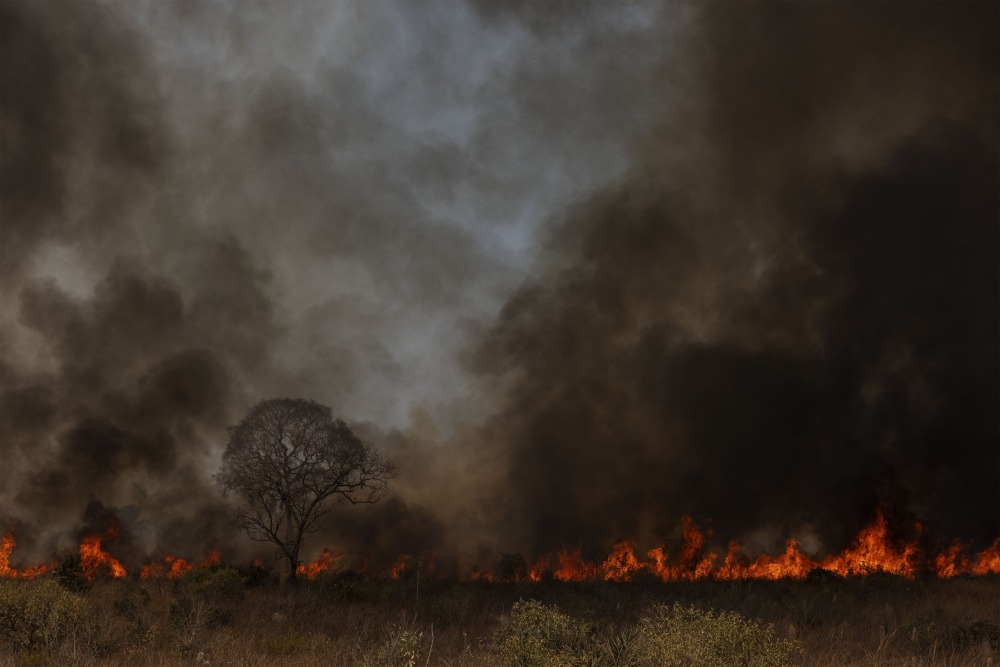
In the Pantanal, the Amazon, and across the Americas, Ame and her team have been preparing for the coming fire season. “We always have fire on our minds,” she said. “We evaluate the threat and history. We look at the data. We ask our partners, ‘How are you thinking about early fire prevention and management?’”
Despite fire’s damaging consequences, Ame emphasized the importance of a multi-faceted perspective. “It’s not that fire is always bad,” she said. “Fire is a natural process in many ecosystems across the Americas.”
Indigenous Peoples and local farming communities in the Americas have long used carefully managed fire as a tool to steward landscapes, support agriculture, and maintain biodiversity. Scientific recognition is increasing around these practices as forms of cultural or prescribed burning, and they reveal the important role of fire when applied intentionally and appropriately.
Traditional fire knowledge has not disappeared entirely, but in many places it has been marginalized or disrupted by changing land-use practices, displacement, and policies that treated all types of fire as harmful. Increasingly, scientists and practitioners recognize that strengthening community-led fire stewardship is an essential component of living with fire in a warming world.

Emergency support from our Sustainability Action Fund helped Natura Bolivia provide training and equipment to fire-impacted communities, by Marcelo Perez del Carpio
Preparation, Prevention, and Collaboration
Conservation that integrates fire prevention and response can support the resilience of people who live within or on the edge of the rainforest. In Bolivia, the 2024 fires burned 159% more land than average and blazed dangerously close to communities. Thousands of people were impacted in Santa Cruz Department (state), where blazes burned millions of acres, including almost 60,000 acres in a protected area we are helping establish. We were able to support our local partner, Natura Bolivia, in providing emergency supplies, firefighting equipment, and coordinating with municipal governments, national parks, and Indigenous and community leaders for an all-hands effort to control fires across the area.
For Raine Donohue, who works closely with our local partners as a Conservation Grants Officer for Latin America, this spirit of collaboration offers a ray of hope in the face of a growing fire risk. “Everyone is expecting it to be a challenging and difficult year, but we are all in it together,” she said. “Our partners and their local allies are resilient and committed to a shared goal.”
Since 2021, our partnership with Natura Bolivia has incorporated fire prevention and mitigation, including annual firefighter training. “They continue to strengthen local capacity and strategies and are already applying lessons from this crisis to prepare for the next fire season,” Raine said. This includes continued coordination of firefighting teams, building wells for water to fill emergency tanks, and introducing new technology like thermal-imaging drones.
Rainforest Trust stays on top of real-time fire events with customized satellite monitoring. This allows conservation teams to track fire activity and emerging risks in our current and historic project areas. Holly Torres, also a Conservation Grants Officer for Latin America, received an alert earlier this year of possible fires in Mexico’s Sierra de Cacoma Proposed Protected Area, where we are working with Pronatura Mexico to connect a corridor for big cats. Holly immediately reached out to our local partner and learned that coordination with municipal and state governments had already begun to bring the blazes under control.
Preventing catastrophic fires begins long before flames appear on the landscape. Early warning systems, community brigades, prescribed and cultural burning, watershed protection, and stronger partnerships among Indigenous communities, local governments, scientists, and conservation organizations are all part of building more fire-resilient landscapes.
“When our partners build collaborations across sectors, like conservation and local government, they can leverage expertise and expand their capacity to prevent and respond to fires,” Holly said. “The forest in Sierra de Cacoma is still standing because they were able to mobilize, coordinate, and fight the fire together.”
Power in Partnership
Collaboration is a vital tool for addressing the growing threat of fire, and Rainforest Trust can play an important role as a convener across the Americas. One learning exchange, for example, brought together partners from Argentina, Colombia, Brazil, Bolivia, Mexico, and Peru to share tools, lessons, and proven methods for raising awareness, building partnerships, and equipping communities.
“Our challenge is learning how to prevent destructive fires while supporting the ecological and cultural relationships with fire that have sustained communities for generations,” Ame said. “With our local partners, we are well placed to proactively shape solutions that protect both people and nature through conservation that ensures landscapes and communities are prepared, resilient, and able to thrive.”

Fires are destroying the biodiverse wetlands of the Pantanal. Photo courtesy of Onçafari
The Latest

Nine private funders announce more than $500 million commitment to recover the world’s most threatened species

The Little Frog Behind a Big Conservation Story

Rainforest Trust Surpasses 70 Million Acres Protected Worldwide; Organization adds 10 million protected acres in just eight months

From Landmines to Rainforest Guardians

Rainforest Trust Announces $10 Million Commitment to Conservation in Madagascar

Angola: A Letter from Our CEO

Madagascar Designates Protected Landscape in Tsinjoarivo’s Montane Rainforest

Why We Support Indigenous-led Conservation
Sign up to receive the latest updates
"*" indicates required fields