

A Heart That Still Beats: The Rediscovery of Mindoro’s Rarest Bird

Authors: Jennica Paula Masigan, John Lister Bibar, Joshua Manila, and Neil Aldrin Mallari of the Center for Conservation Innovation Ph Inc. (CCIPH). CCIPH is our partner in the Philippines, where we are supporting two Indigenous communities in securing title to 75,000 acres of their ancestral lands in Mindoro’s rainforest, the first step in the area being established as an Indigenous Community Conserved Area to prevent forest and biodiversity loss.
Somewhere in the forests of Mindoro, a small ground-dwelling pigeon moved through the leaf litter and passed in front of a camera trap. No one was there to see it. There was no sudden call from the field, no bird flushed from the undergrowth, and no brief sighting through binoculars. The evidence remained inside the camera until the equipment was retrieved and its files reviewed.

The recent sighting of a Critically Endangered Mindoro Bleeding-heart gave our partners new insight on future research and protection strategies. © CCIPH
We found ourselves looking at a bird that most of the world had quietly begun to grieve: the unmistakable Mindoro Bleeding-heart (Gallicolumba platenae). It is a small, secretive pigeon with a splash of red at the center of its chest, as if it were still bleeding from a wound that never heals.
It was the first confirmed photograph of the species in two decades!
Twenty Years of Near-Silence
For an extremely rare and secretive species, a single image can carry enormous weight. It confirms that the bird continues to survive within the landscape. It also gives us a new opportunity to examine a question that has remained unresolved for years: Where does the Mindoro bleeding-heart persist today after much of its historical forest habitat has been lost, fragmented, or altered? The image is a valuable piece of evidence from a species whose ecology, distribution, and remaining population are still poorly understood.
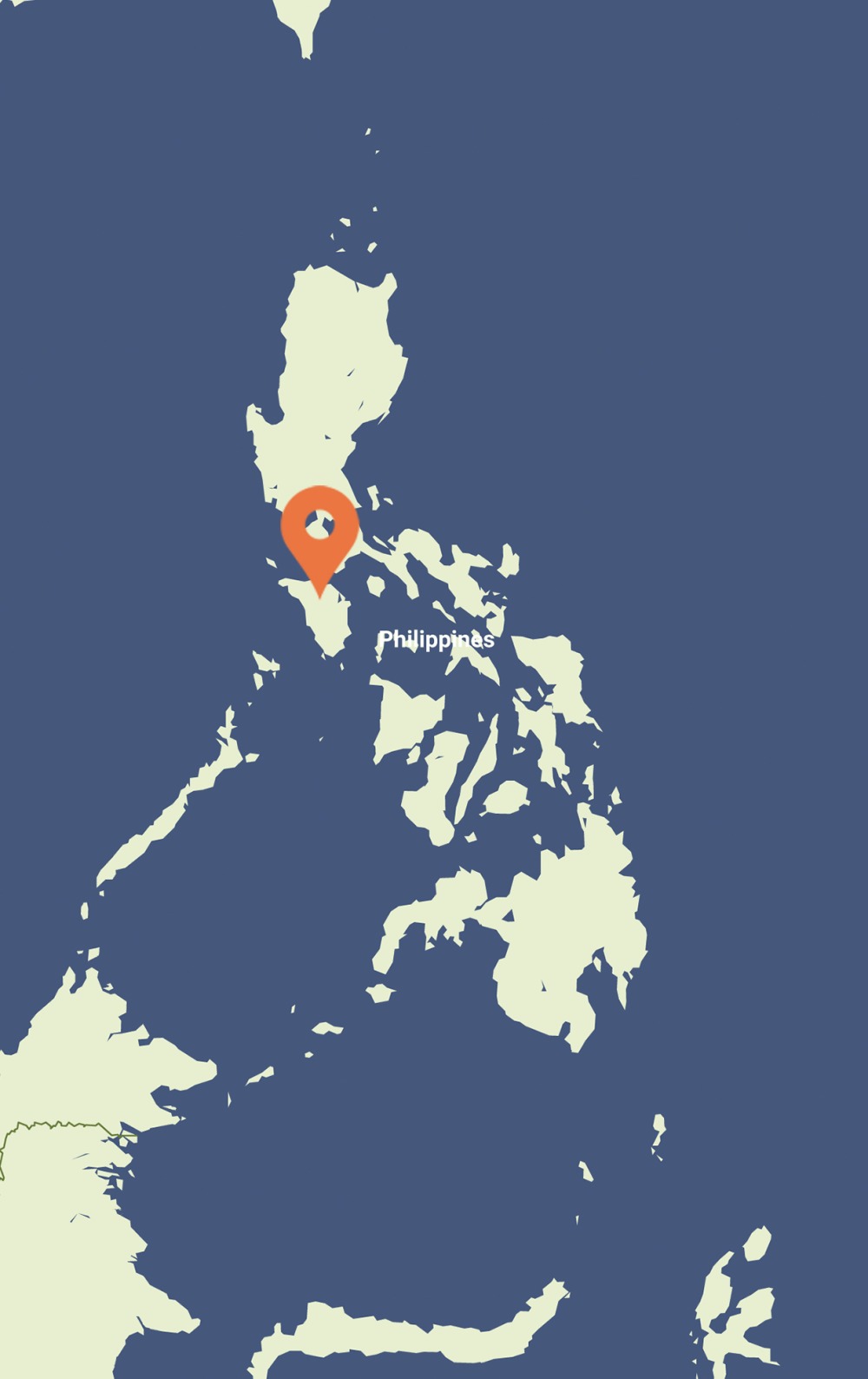
Historical and modern accounts present very different pictures of the Mindoro Bleeding-heart. The bird was once described as common in Mindoro’s forest interiors. But by the latter half of the twentieth century, positive identifications had become few and far between. The species was considered highly localized by 1954, with later records concentrated in only a handful of areas, including Puerto Galera, Mt. Siburan, and Mounts Iglit-Baco National Park.
The last confirmed record of the species was not a photograph taken by a scientist. In 2005, an individual bird was caught in a snare intended for Red Junglefowls near a fruiting Ficus tree. The hunter was likely unaware that they were holding one of the rarest birds in the world. Other encounters were reported from different areas, but not all could be confirmed. During our field surveys, most villagers and local guides were unfamiliar with the species, while some hunters said that it had not been observed for years.
That absence eventually earned the Mindoro Bleeding-heart a place on the Lost Birds List, a global registry of birds not seen, heard, or genetically detected in a decade or more. For a species already listed as Critically Endangered, disappearing from that record is its own kind of warning.

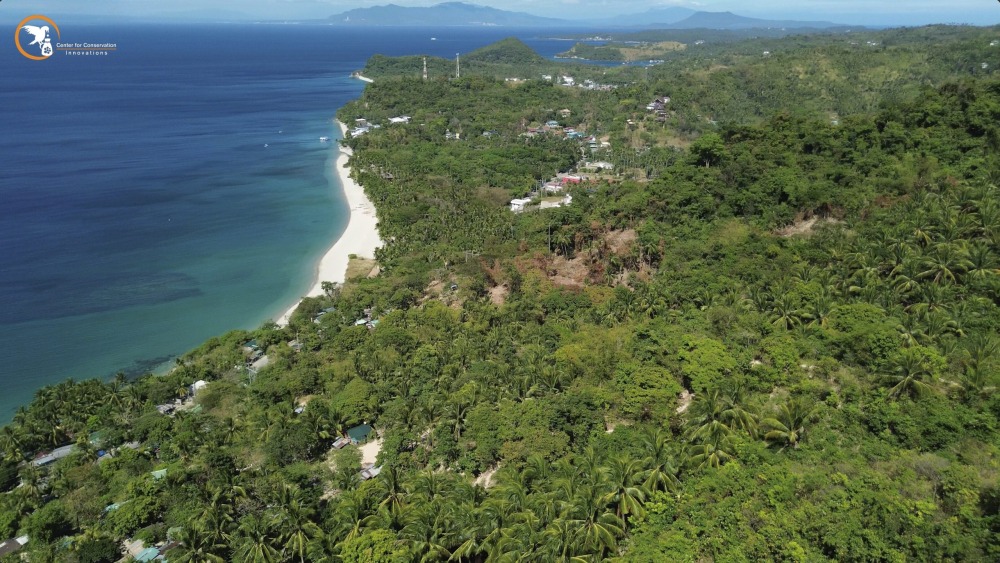
Researchers from CCIPH travelled through difficult terrain to survey the forest and safeguard habitat. © CCIPH
The Romeo Error
Earlier research by our team examined the natural and human-driven threats to the Philippine bleeding-heart species. The study combined field surveys, vegetation measurements, habitat analysis, historical and contemporary occurrence records, and ecological modelling. Our modelling for Mindoro did not detect the species at all.
This result was difficult to interpret. Non-detection is not the same as absence, especially for a species that is naturally secretive and possibly present at extremely low densities. The probability of recording an animal is affected by timing, season, weather, the placement of survey stations, observer experience, and the methods used. Increasing survey coverage may improve detection, but even intensive surveys can fail to record a rare species that remains concealed within dense vegetation.
There is a term conservation biologists use, borrowed uneasily from Shakespeare: the “Romeo Error.” In the play, Romeo finds Juliet in a deathlike sleep, believes she is truly gone, and takes his own life before she wakes. The tragedy is not that she died. It’s that Romeo stopped looking, stopped believing, and stopped waiting, right before the moment that would have proven him wrong.
Conservationists fear their own version of this mistake constantly: declaring a species extinct, redirecting funding and attention elsewhere, only to learn later that it was alive all along, quietly surviving in some overlooked corner it was never expected to be in. Every year that passed without a trace of the Mindoro Bleeding-heart pushed the conversation closer to that edge, whether continuing to search was still justified or whether it was time to let go. The bird, it turns out, was not ready to let go.
A lowland specialist at high elevation
What makes our August 2026 detection so striking isn’t just that it happened but also where it happened. The Mindoro Bleeding-heart has always been described as a lowland specialist and is typically found around 400 meters above sea level, occasionally pushing up toward 800 meters. It is not, by any historical account, a bird of the highlands.
Years ago, our studies suggested that the geography of suitable habitats may have changed. We predicted that the species’ distribution might be concentrated at higher elevations, and this newly recorded bird appeared above 900 meters, well outside of the historical range. While one camera trap record cannot validate the Mindoro Bleeding-heart’s entire range and distribution, it is an independent contemporary occurrence, consistent with a prediction made before the bird was documented. The record supports the hypothesis that at least some surviving Mindoro Bleeding-hearts still persist in upland forest refuges.
The record also carries a warning. Species don’t typically abandon the habitat they’re built for unless something about that habitat has stopped working for them. A lowland specialist appearing in high-elevation forest is not necessarily a species expanding its horizons. It may be a species running out of lowland to live in, pushed uphill into terrain that is cooler, steeper, and that it is less suited to, simply because that is what remains. When the forest a species evolved for keeps shrinking, “unfavorable” ground can become the only ground left.
A warning written in feathers and pixels
Mindoro’s forests, which once extended from the lowlands to the island’s central mountain spine, have been reduced, disturbed, and divided into increasingly isolated patches. Agriculture, settlement, quarrying, timber extraction, roads, and other forms of land conversion have changed the landscapes. What was once contiguous lowland forest, the exact habitat the bleeding-heart depends on, now exists as mosaics within an island, separated by farmland and settlement.
It would be easy to treat this re-discovery as a happy ending. But it is not. It is a data point, and a fragile one: The image proves that the species persisted long enough to pass in front of one camera. It is a single confirmed occurrence of a single bird in a landscape where suitable forest has become increasingly fragmented. A lowland bird forced into the highlands is a warning written in feathers and pixels.
Yet it is also undeniably hopeful. For years, the Mindoro Bleeding-heart remained at the edge of scientific certainty. There is hope in the fact that we did not stop looking, that no one committed the Romeo error, closed the file, and walked away while the bird was still out there in the dark. The image allows us to move from uncertainty to more focused research and protection, to put real investment into restoring the forests the Mindoro Bleeding-heart needs before we have to wait 20 more years for the next photograph.
The Bleeding-heart earned its name from the colored patch on its chest. Somewhere in the forests of Mindoro, that heart is still beating. Whether it continues to beat for another twenty years or another hundred will depend on whether we treat this image merely as an extraordinary record or allow the evidence it carries to change what we do next.
Acknowledgements
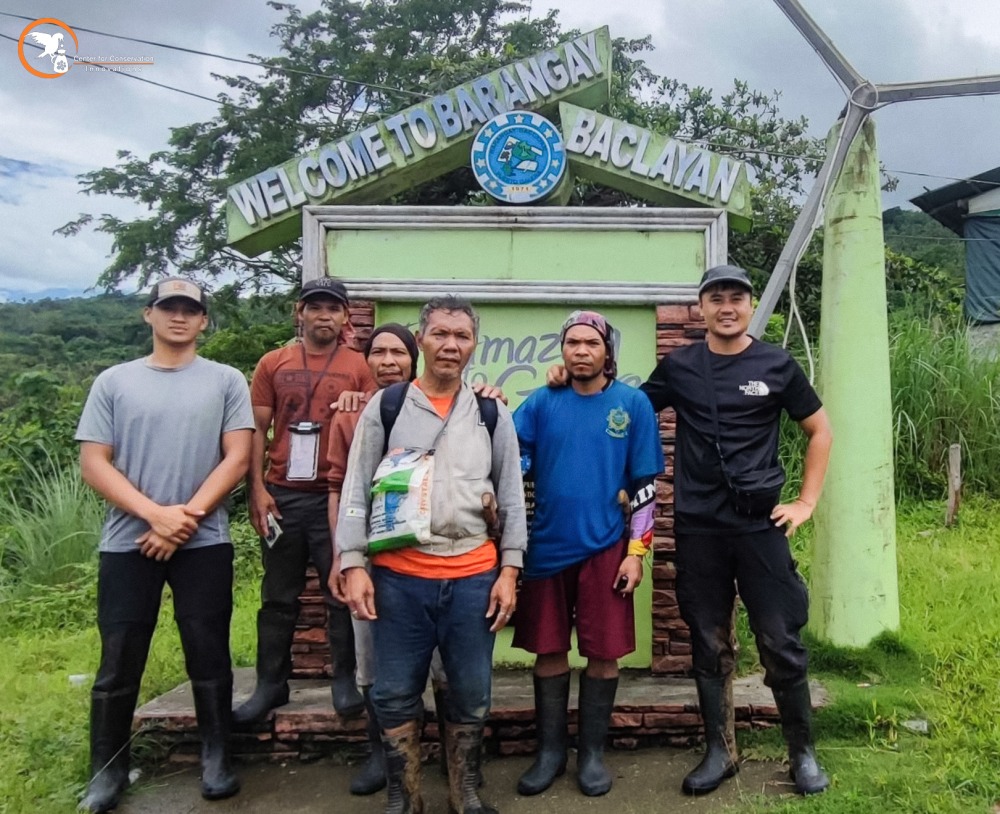
This record emerged from an Indigenous-led conservation effort within the Iraya Mangyan ancestral domain, undertaken through the partnership of the Iraya Mangyan communities and CCIPH. It would not have been possible without the Iraya Mangyan patrollers (Alex, Melenciano, Cristito, Jay, and Sonnyboy) of the Mindoro Forest and Biodiversity Conservation Programme (MFBCP), whose deep knowledge of the landscape, sustained presence in the forest, and responsibility for protecting their ancestral domain guided and supported the survey. Working with them, John Bibar and Joshua Manila carefully deployed the camera traps. Behind the image were years of traveling through difficult terrain, reading the forest, carrying and installing equipment, and safeguarding the habitat in which the Mindoro Bleeding-heart continues to survive. The rediscovery is therefore not only a product of scientific monitoring and technology but also of Indigenous knowledge, stewardship, and long-term protection of the ancestral domain.

The recent sighting of a Critically Endangered Mindoro Bleeding-heart gave our partners new insight on future research and protection strategies. © CCIPH
The Latest
A Heart That Still Beats: The Rediscovery of Mindoro’s Rarest Bird

Nine private funders announce more than $500 million commitment to recover the world’s most threatened species

The Little Frog Behind a Big Conservation Story

Rainforest Trust Surpasses 70 Million Acres Protected Worldwide; Organization adds 10 million protected acres in just eight months

From Landmines to Rainforest Guardians

Rainforest Trust Announces $10 Million Commitment to Conservation in Madagascar

Angola: A Letter from Our CEO
