

Tracking Gorongosa’s Gentle Giants
In her role as Conservation Grants Officer for Rainforest Trust projects in Africa, Megan Clemens builds long-term, trusting relationships with partners working on the ground to save rainforests and their incredible species. She shared her reflections from a recent visit to Mozambique, where conservation strengthens local communities and protects iconic wildlife.
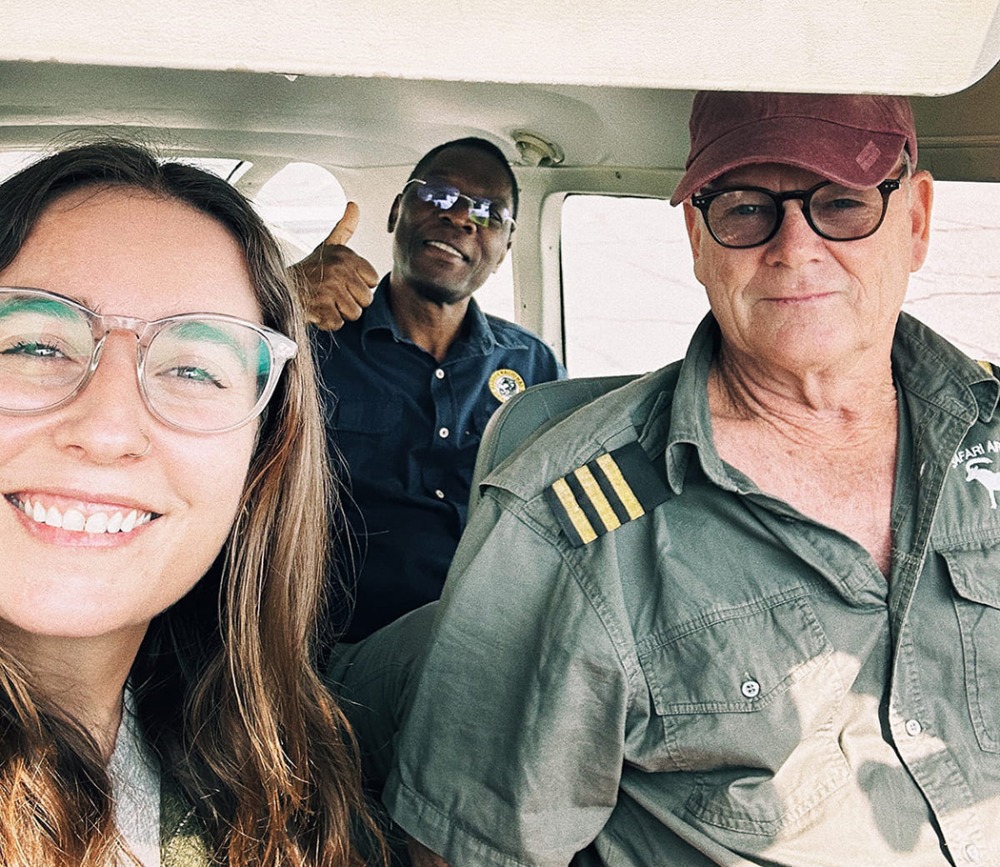
Last October, I traveled to Mozambique to visit Rainforest Trust’s partners and active projects. It was hard to imagine, when landing on the airstrip in Chitengo, the headquarters of Gorongosa National Park, that this landscape was once one of the most significant battlegrounds of the Mozambican Civil War. Yet reminders remain. A wall pockmarked with bullet holes stands near the headquarters, a testament to the violence that once consumed this place.
In collaboration with the Gorongosa Restoration Project, Rainforest Trust has supported the establishment of the Cheringoma and Dingue Dingue Community Conservation Areas (CCAs) and is working toward the creation of a third, the Piro CCA. These CCAs act as a buffer between the National Park and surrounding communities and are vital for the co-existence of wildlife and humans and preventing deforestation and encroachment. Another Rainforest Trust project will convert a former hunting concession into an extension of Gorongosa National Park, linked through the Cheringoma CCA and a sustainable community agricultural zone. Together, these efforts strengthen landscape connectivity while advancing community-led conservation.
At a time when conservation and environmental protections are facing mounting challenges globally, impacting both people and ecosystems, my time in Gorongosa offered something that seems, increasingly, rare: hope.
I saw what is possible when long-term vision, community partnership, and sustained investment come together to rebuild a conservation landscape in the wake of conflict.
During the civil war, which claimed more than one million lives and displaced millions more, Gorongosa lay at the epicenter of the fighting. Chitengo became a base of operations for the Mozambique National Resistance Movement and a military supply hub. Wildlife populations were devastated, with animals killed for food or poached to fund armed conflict. When the war ended in 1992, Gorongosa’s ecosystems had been pushed to the brink.
Reinvestment in the park began in the mid-1990s, first through the African Development Bank and later through long-term support from philanthropist Greg Carr and the Carr Foundation. Today, the results of this sustained commitment are visible across the landscape. Many wildlife populations have rebounded to near pre-war levels: African Wild Dogs, once locally extinct, were successfully reintroduced in 2018 and 2019. The prevalence of young Lions suggests growing and stabilizing prides. During my visit, I was fortunate to see both Lions and Wild Dogs every day I spent in the park.
Elephants, however, tell a more complex story.
Heavily poached during the war, the Endangered African Savanna Elephants that survive in and near Gorongosa carry lasting trauma from the violence they encountered. While elephants can always pose risks to people, Gorongosa’s older elephants are particularly reactive, exhibiting behavior widely understood to be linked to their experiences during the conflict. Elephants here often respond aggressively when they are confronted by or encounter humans, a result of their incredible capacity for memory—now translating into deep distrust of humans.
Today, human-wildlife conflict is one of the greatest threats facing elephants and other wildlife in the landscape. Areas surrounding Gorongosa are densely populated and agriculture is widespread. When elephants come into contact with humans and destroy crops, communities feel the pressures of food insecurity. Confrontations can end tragically for elephants or people.
The Gorongosa Restoration Project works with communities on practical prevention measures to protect people, wildlife, and livelihoods. These include elephant-proof grain silos, beehive fences (a surprisingly effective deterrent, as elephants strongly dislike bees), reflective aluminum barriers, chili-based deterrents with piri piri peppers, and the tracking and monitoring of collared elephants.
I spent time with residents in the Dingue Dingue Community Conservation Area, including beekeepers who steward the hives of elephant-deterring fences and harvest the honey to sell. With Rainforest Trust funding, the Community Natural Resource Committee has constructed fish ponds that now feed local families.
The experience solidified one of my core beliefs as a conservationist: One of the most effective ways to prevent habitat and biodiversity loss, and to build resilience in the face of climate change, is to invest in and empower communities.
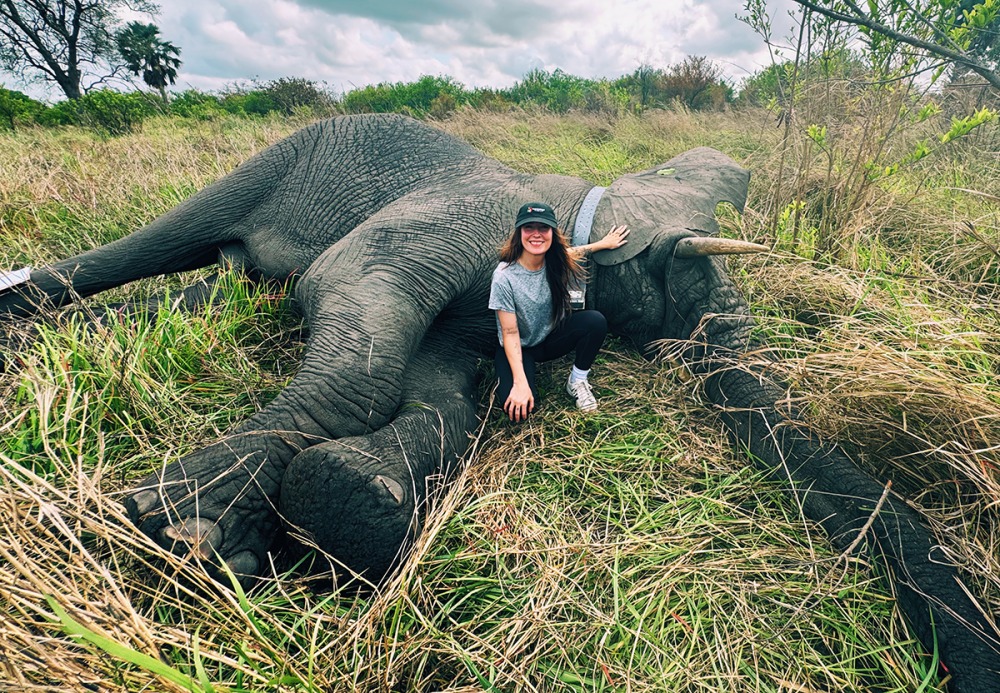
Also in the Dingue Dingue CCA, I had the opportunity to join Dr. Dominique Gonçalves, Elephant Ecology Project Manager, and Antonio Paulo, Head Veterinarian, on an elephant-collaring operation The day was full of firsts: my first helicopter ride, my first time standing just feet from a wild elephant, and memorably, my first time collecting an elephant fecal sample.
From the air, we searched for specific individuals suitable for collaring, like elephants that spend the most time in and around community settlements or that have conflicted with communities in the past. We flew over multiple herds before locating a lone male, approximately 35 years old. Based on the elephant’s age, it is very likely he was born during the final years of the civil war.
Pilot Peter Perlstein angled the helicopter and dipped low to give Antonio the clearest view, while I had a front row seat to witness the skills and expertise it takes to safely administer an elephant tranquilizer. We monitored the elephant for about 20 minutes while the sedation set in, and Peter guided the elephant into an area where we could land and get to work.
The team worked quickly and efficiently to minimize the time the elephant spent under. Dominique ensured his airway was clear by positioning his trunk, while I paused to absorb the moment, standing beside an animal of such scale and presence, feeling incredibly endeared to his very loud and powerful snoring, with each exhale blowing my hair back. Dominique gave clear and precise instructions for gathering biological samples (blood, hair, and feces) to support long-term monitoring, while Antonio and Peter carefully fitted the collar around the elephant’s neck. Within roughly 30 minutes, the procedure was complete. Antonio administered the tranquilizer reversal, and the elephant was safely up and moving by the time we were in the air. I watched him vanish back into the bush.
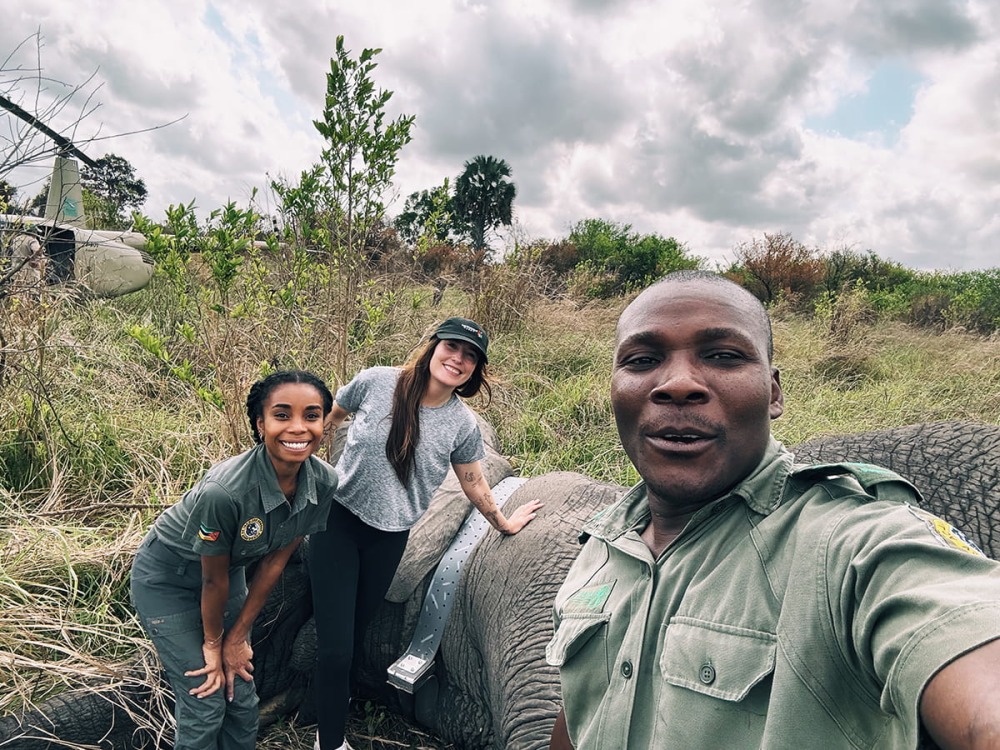
Collar data helps the Gorongosa Restoration Project track elephant ranges and movements, monitor safety and health status, and plan conservation strategies. Tracking also reduces human-wildlife conflict. If a collared elephant moves too close to human settlements, the team deploys rangers to intervene, prevent conflict, and protect people and elephants. Depending on the collar type, battery life typically lasts between one and three years. Some collars fall off on their own, and the team removes others once the battery expires.
The experience was one I will carry with me for the rest of my life, and I am deeply grateful to the team for welcoming me into their work. As a final and unexpected honor, Dominique invited me to name the elephant. I chose the name Clemente because it means “merciful, forgiving, or gentle” in Portuguese. I won’t lie and say that I didn’t also like the name because of its similarity to my own. It is my hope that Clemente’s future will be far gentler than his past. And that, through conservation that supports both communities and the elephants, lasting harmony and peaceful coexistence will prevail.

Sign up to receive the latest updates
"*" indicates required fields
The Latest

Tracking Gorongosa’s Gentle Giants

Rainforest Trust Surpasses 60 Million Acres Protected Worldwide

Protect Rare Parrots Targeted by Traffickers

Everyday Products That Cause Deforestation

Student Swimmers Power Through 66km Challenge to Protect the Rainforest

Brazil Announces Expanded Commitment to Community-Led Conservation in the Amazon

Notes from the Field: Finding a Human-Nature Balance in the Pantanal
