
Endangered wildlife need your help in Borneo’s ancient rainforest
TRIPLE YOUR DONATION TRIPLE YOUR DONATIONTriple your impact for Borneo’s remarkable biodiversity
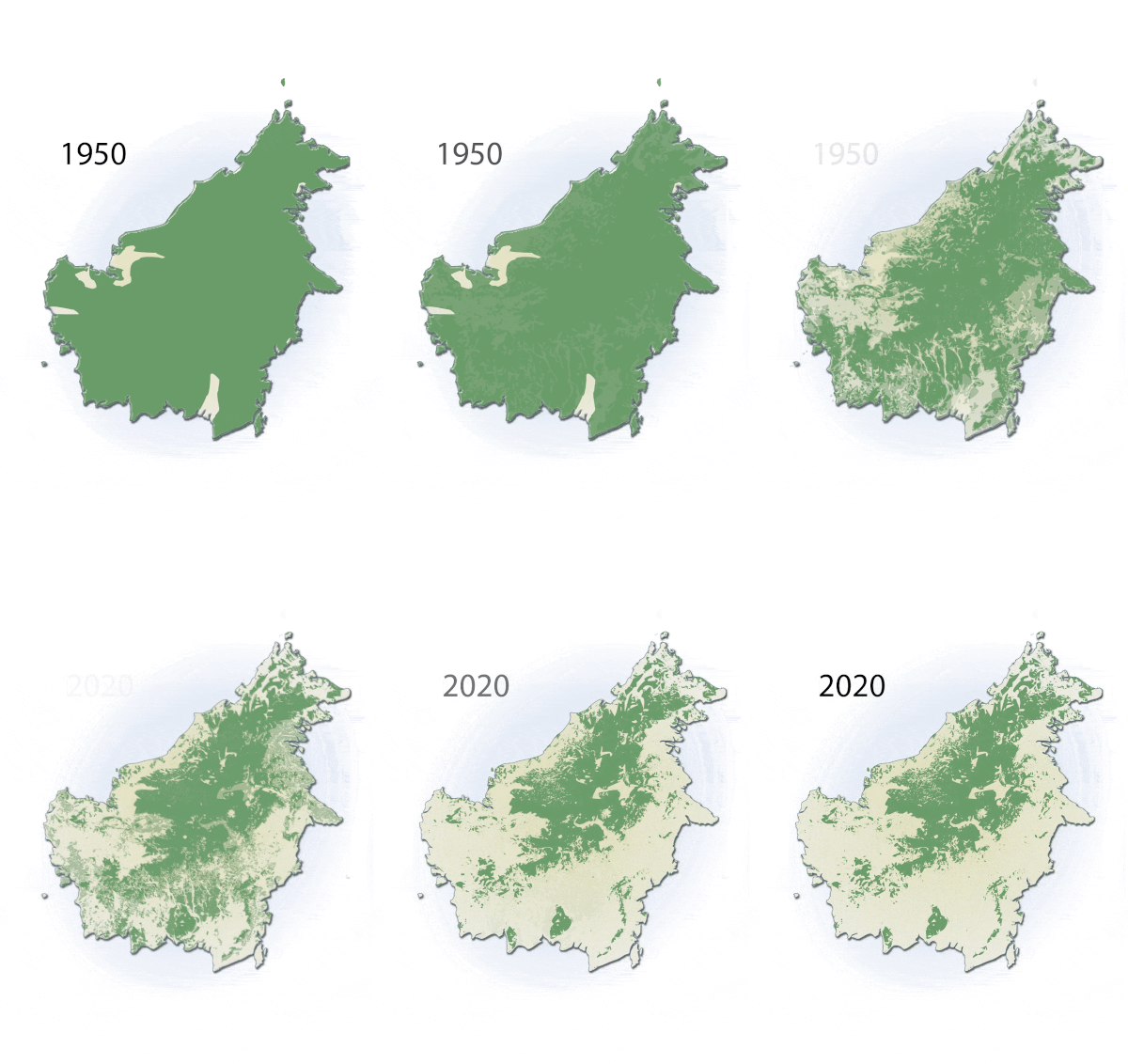
Borneo’s ancient rainforest and its incredible species are in immediate and urgent danger. After decades of deforestation that continues to this day, half of Borneo’s rainforest has been lost. And now, Indonesia is experiencing the worst fire season in decades with more than 2 million acres burned this year alone.
We must stop industrial-scale deforestation for oil palm plantations, logging, mining, and other commercial exploitation on Borneo. Every $1 donated will be matched by $2 until we reach our $100,000 goal—giving your gift 3X the impact.
 We need your help to protect a vital stretch of Borneo’s rainforest, before it’s lost forever.
This Giving Tuesday, your gift will be tripled to help protect the Upper Mahakam River basin in Indonesian Borneo. This critical wildlife corridor supports fragile populations of endangered orangutans, leopards, langurs, and hornbills among thousands of other species. Donate now, and your gift will help:
- Stop the advance of oil palm plantations that have already razed millions of acres
- Prohibit land conversion to agriculture through dangerous “slash-and-burn” practices
- Stop road construction that cuts through wildlife corridors
- Support Indigenous Peoples’ rights to protect and steward their ancestral territories
Above: Deforestation has claimed half of Borneo’s rainforest since 1950.
(Source: Hugo Ahlenius. Extent of deforestation in Borneo 1950-2005,
and projection towards 2020. Published 2006 on GRID-Arendal.)
Deforestation has claimed
of Borneo's original rainforest.

Oil palm plantation in Kudat Sabah, Borneo, by CnOra

Critically Endangered Bornean Orangutans, by Luka Szeman Photo

Deforestation for coal mines in East Kalimantan, Borneo, by Sugeng Santoso14

Critically Endangered Helmeted Hornbill, by Jamil Bin Mat Isa

Rainforest in Borneo, by Rainforest Trust

Vulnerable Sunda Clouded Leopard, by Spencer Wright Flickr/CCA

Critically Endangered Helmeted Hornbill, by Thipwan

Endangered Bornean Gibbon, courtesy of Bildagentur Zoonar GMbH

Deforestation for coal mines in East Kalimantan, Borneo, by Luka Szeman Photo

Vulnerable Rhinoceros Hornbills, photo by Feather Collector

Vulnerable Sun Bear, by Lillian Tveit
With our local partner, Yayasan Konservasi Alam Nusantara, we will support the creation of Customary Forests or Village Forests across 600,000 acres connected to Betung Kerihun National Park and Bukit Sapat Hawung Nature Reserve for total protection that covers approximately 2.4 million acres.
The Dayak Indigenous Peoples have managed this rainforest for centuries, and government designations will guarantee their right to pursue sustainable, forest-based livelihoods while protecting the rainforest and its wildlife from destructive outside interests.
Donate now to stop the devastation in Borneo’s rainforest, before it’s too late.
Healthy Rainforests. Healthy Planet.
Healthy rainforests are critical to a healthy planet. Creating protected areas is the most effective way to protect endangered animals, safeguard biodiversity, stop deforestation, and maintain the health of all species on our planet.


Sign up to receive the latest updates
"*" indicates required fields